
Unveiling the Secrets of Logical Puzzles: The Mathematics Behind the Solutions

Explore the Fascinating Realm of Logical Puzzles
Logical puzzles have captivated minds around the globe, blending fun with mathematical reasoning. This compelling intersection of entertainment and intellect invites enthusiasts to challenge their cognitive skills and uncover the hidden structures of reasoning. Engaging with these puzzles not only provides enjoyment but also sharpens mental acuity, revealing the power of logical thought.
What makes these puzzles so alluring? Here are some key elements that contribute to their widespread appeal:
- Engagement: They encourage critical thinking and stimulate problem-solving abilities. Consider the classic scenario involving hats: three individuals each wear a hat that is either black or white. They can only see the hats of the others but must deduce the color of their own hat based on what they observe. Such riddles compel participants to think deeply about the information at hand.
- Variety: The landscape of logical puzzles is rich and diverse, from brain teasers and classic riddles to number games like Sudoku and logical grids. Each form presents unique challenges that cater to different cognitive styles; for instance, Sudoku emphasizes numerical logic while riddles often require lateral thinking.
- Mathematical Foundations: Many puzzles are grounded in mathematical principles, adding layers of complexity. A prime example is the famous “Four 4s” puzzle, where the challenge is to create every number from 1 to 100 using exactly four instances of the digit 4. This puzzle not only enhances arithmetic skills but also encourages creative mathematical thinking.
Moreover, the approach to solving these puzzles often reflects a systematic methodology. Success often requires a mix of logic, creativity, and a dash of intuition. Understanding the underlying mathematics can reveal new strategies for solution, making the experience not just rewarding but educational. It isn’t merely about finding the answer; it’s about the journey of arriving there, which strengthens mental discipline and fosters a growth mindset.
In this article, we will delve into the mathematics behind these engaging challenges. Prepare to explore techniques—from deductive reasoning to pattern recognition—that make solving logical puzzles an art as well as a science. For anyone wanting to enhance their cognitive capabilities or seeking the thrill of a good mental challenge, the world of logical puzzles opens up an exciting avenue filled with endless possibilities.
DISCOVER MORE: Click here to learn about cognitive games as a rehabilitation tool
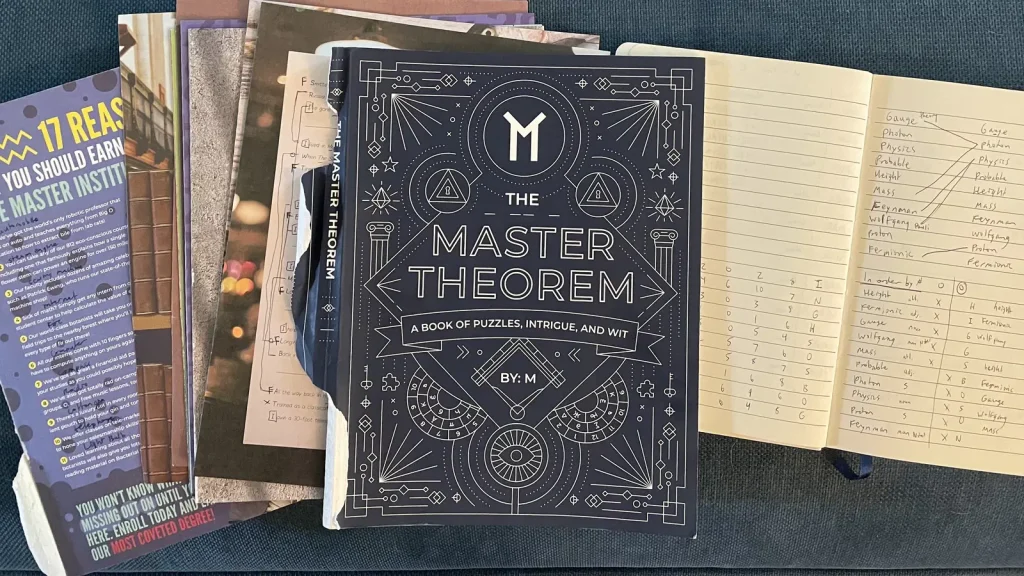
The Intricate Mathematics that Powers Logical Puzzles
To unravel the secrets of logical puzzles, one must first appreciate the profound mathematical principles underlying them. From elementary arithmetic to advanced combinatorial techniques, mathematics serves as the backbone of many puzzles we encounter. Understanding these principles not only enhances the solving experience but also unveils a world where logic and creativity converge.
At the foundation of logical puzzles lies deductive reasoning. This form of logical thinking allows individuals to draw conclusions based on a series of statements or facts. For instance, in the well-known “Knight and Knaves” puzzles, participants must determine who among a group are knights (who always tell the truth) and who are knaves (who always lie). By employing deductive reasoning, solvers can navigate the tangled web of statements to identify the truth. Grasping how to formulate and apply logical statements can significantly elevate one’s problem-solving prowess.
Key Mathematical Concepts in Logical Puzzles
Numerous mathematical concepts contribute to the depth of logical puzzles. Here are a few noteworthy examples:
- Combinatorics: This area of mathematics, which deals with counting, arrangement, and combination of objects, provides tools for solving puzzles like the famous “Five Hats” problem, where participants must deduce the correct sequence of colored hats worn by individuals through a series of observational clues.
- Graph Theory: Graph theory can be observed in puzzles that involve relationships and connections, such as network puzzles. An example is the “Seven Bridges of Königsberg,” where one must determine if it’s possible to cross each bridge exactly once without retracing any steps, illustrating concepts of traversability and Eulerian paths.
- Set Theory: Logical puzzles often touch upon concepts within set theory, highlighting how different sets can intersect or unite. Understanding these relationships helps in solving puzzles that involve logical deductions about groups, such as Venn diagrams that represent memberships in various categories.
Another key aspect is pattern recognition. Many logical puzzles rely on the ability to spot patterns or sequences, which can lead to the solution. For example, in numeric sequences often used in puzzles, identifying whether the numbers follow standard arithmetic or geometric progressions can drastically simplify problem-solving. Engaging in these exercises can improve not just mathematical proficiency, but also critical thinking and analytical skills.
Furthermore, the engagement with logical puzzles often cultivates a sense of curiosity and exploration. Each puzzle is a challenge that calls for a multidisciplinary approach—applying arithmetic skills combined with logical reasoning, every solution is a step toward deeper knowledge and greater cognitive ability. As we continue this exploration into the mathematical underpinnings of logical puzzles, we will unlock even more strategies that can enhance our puzzle-solving acumen and bolster our love for mathematics.
Understanding Logical Puzzles through Mathematics
In the realm of logical puzzles, mathematics serves as the backbone, providing essential insights into problem-solving strategies and cognitive processes. Logical puzzles often require analytical skills and the ability to identify patterns or relationships within the given data. The application of mathematical concepts not only enhances our problem-solving abilities but also enriches our understanding of the intricacies involved in these puzzles.One of the most compelling aspects of logical puzzles is their ability to sharpen critical thinking. Engaging with challenging puzzles can improve cognitive flexibility, thereby allowing individuals to approach problems from various angles. This practice not only fosters creativity but also equips solvers with methods to tackle real-world challenges. Furthermore, delving into the mathematics behind these puzzles reveals how concepts such as probability, combinatorics, and logic come into play, often leading to surprising and satisfying solutions.Additionally, logical puzzle enthusiasts often benefit from understanding the techniques of mathematical reasoning. For instance, the formulation of hypotheses and the process of deduction are crucial in navigating through complex scenarios. By applying these mathematical tools, solvers can break down puzzles into manageable components, making it easier to draw conclusions.Moreover, many logical puzzles are associated with famous mathematical problems, such as the Monty Hall problem, which showcases the essence of probability theory. By studying the mathematics behind such puzzles, individuals not only enjoy the challenge but also gain valuable knowledge that can be applied in fields ranging from education to computer science.To appreciate the interconnectedness of logic and mathematics further, consider the historical context of puzzle-making. The evolution of puzzles often mirrors advancements in mathematical theories and practices over the years. As puzzle creators have embraced cutting-edge mathematical concepts, the puzzles themselves have become more engaging and intellectually rewarding.As readers will discover, the domain of logical puzzles intertwined with mathematics not only provides entertainment but also serves as a gateway to new areas of exploration, pushing the boundaries of our intellectual capacities and igniting a passion for problem-solving.
DIVE DEEPER: Click here to learn more about cognitive improvement
The Interplay of Logic, Mathematics, and Creativity
As we delve deeper into the mathematical tapestry that forms the essence of logical puzzles, it becomes clear that the interplay between logic and creativity is crucial to solving these enigmas. One prominent method employed in logical puzzles is inductive reasoning. Unlike deductive reasoning that starts with established facts to draw conclusions, inductive reasoning generates generalizations based on observed patterns. This technique is prevalent in puzzles involving sequences or progressions, where solvers must identify the next element based on preceding values.
The application of inductive reasoning can be seen in classic puzzles such as the “Fibonacci Sequence” or the “Magic Squares.” In these puzzles, recognizing the inherent patterns leads to greater insight and the correct solutions. Notably, logic puzzles often encourage lateral thinking—a method that promotes an innovative approach to problem-solving beyond conventional strategies. This fosters a mindset receptive to exploring multiple pathways, enriching one’s ability to tackle challenges in various contexts.
Game Theory: A Mathematical Approach to Strategy
Entering the realm of strategic thinking, game theory offers fascinating insights into collective decision-making and problem resolution within logical puzzles. In puzzles like “Prisoner’s Dilemma,” individuals navigate a scenario where their choices directly influence their outcomes based on the actions of others. Here, mathematical principles analyze the strategies adopted by players to achieve optimal results—whether to cooperate or compete—and the reasoning behind their decisions reflects both psychological and mathematical complexities.
Understanding these strategic interactions can illuminate the thought processes involved in many logical puzzles, encouraging solvers to think beyond immediate solutions and anticipate the repercussions of their decisions. The blend of mathematical rigor and psychological insight in game theory adds another dimension to solving logical puzzles, enabling participants to craft more profound strategies.
Probability and Logical Puzzles
The element of probability plays an integral role in numerous logical puzzles, especially those that involve predicting outcomes or assessing risks. Consider the classic “Monty Hall Problem,” where a contestant must decide whether to stick with their initial choice or switch after one incorrect option has been revealed. This puzzle demonstrates counterintuitive probabilities that defy initial impressions, urging participants to consider not just raw numbers but also the underlying mechanics that guide decision-making in uncertainty.
Grasping the principles of probability will not only aid in solving such puzzles but also enhance critical thinking applicable in real-world situations, such as assessing risk in investments or making informed choices in everyday life. By building an understanding of probability, solvers gain a sporting edge, supporting their mathematical toolkit while navigating through various logical dilemmas.
Embedding Creativity within Mathematical Frameworks
Ultimately, the essence of logical puzzles lies in their ability to fuse logical reasoning with creative exploration. As solvers engage in inferring, deducing, and strategizing, they unlock the intuitive aspects of mathematics. The beauty of this relationship is particularly evident in puzzles like “Sudoku” or “Crossword,” where mathematical constraints blend seamlessly with linguistic creativity. These puzzles challenge individuals to think outside the box while employing systematic approaches to find solutions.
Each adventure through a logical puzzle is not merely a path to a solution but a journey rich with exploration and discovery. By embracing both mathematical principles and creative maneuvering, participants not only become adept at solving but also cultivate a lifelong affinity for logic and mathematics in everyday life. The secrets behind logical puzzles continue to unravel as enthusiasts engage with their complexities and strive to solve them, revealing the vast potential that lies within this intriguing intersection of math and logic.
DISCOVER MORE: Click here to dive deeper into puzzle challenges
Final Thoughts on Unraveling Logical Puzzles
As we conclude our exploration into the remarkable world of logical puzzles, it becomes evident that the marriage of mathematics and creative thinking serves as the foundation upon which these intriguing challenges are built. From the application of inductive reasoning to the strategic frameworks of game theory, each facet reveals a deeper understanding of how mathematical concepts enhance our problem-solving capabilities.
Moreover, the power of probability further enriches our approach, demonstrating that even in the face of uncertainty, informed decisions can lead to success. Logical puzzles encourage not only skill development but also foster a mindset of curiosity and perseverance, urging individuals to embrace the journey of discovery as they strive for solutions.
In light of these insights, engaging with logical puzzles goes beyond entertainment; it transforms into an educational experience that sharpens the mind and stimulates creativity. As we decipher these puzzles, we cultivate analytical skills applicable to real-world scenarios, empowering us to confront challenges with confidence and innovation. Thus, as enthusiasts of logical puzzles uncover their secrets, they are not only solving equations but also integrating vital mathematical principles into their everyday lives.
Ultimately, the realm of logical puzzles beckons us with its complexity and allure, inviting new explorers to join the quest. As you continue to immerse yourself in these fascinating challenges, remember that each solution is not just a victory but a testament to the endless possibilities that exist at the intersection of logic, mathematics, and creativity.