The Future of Brain Teasers: Technological Innovations and Virtual Games
Revolutionizing Puzzle Engagement Through Technology
The world of puzzles is evolving beyond traditional formats, thanks largely to technological advancements. The fusion of physical and digital realms, particularly through innovations like augmented reality (AR) and virtual reality (VR), has transformed how puzzle enthusiasts engage with challenges. These developments make it possible for users to immerse themselves in intriguing scenarios where the solutions often require both mental dexterity and a keen awareness of their surroundings.
Several key factors are facilitating this monumental shift in puzzle-solving:
- Augmented Reality (AR): By layering digital puzzles over real-world environments, AR allows players to solve challenges in their actual surroundings. For example, platforms like “Pokemon GO” have demonstrated how AR can blend gameplay with physical exploration. Imagine solving a mystery as you walk through your local park, using your device to interact with hidden clues that appear only through the screen of your smartphone.
- Mobile Applications: The smartphone revolution has made puzzle games more accessible than ever. Titles such as “2048” and “Monument Valley” not only offer captivating gameplay but also artfully designed environments that enhance problem-solving. With millions of downloads across app stores, these games illustrate how brain teasers can fit seamlessly into our daily routines—whether waiting in line or during a commute—ensuring that the joy of solving puzzles is always within reach.
- Online Competitions: Websites like “Lumosity” and “Brain Age” have carved out spaces where users can challenge themselves and others. By measuring cognitive performance against global participants, players glean insights into their strengths and weaknesses, transforming puzzle-solving into a community experience that encourages growth and improvement on a global scale.
This evolution in puzzle engagement signifies more than mere entertainment. It opens exciting avenues for cognitive development, as puzzles are known to enhance critical thinking and memory. Comprehending these trends provides a clearer view of how preferences for puzzle-solving are changing in the United States and globally. As technology progresses, the future promises even more sophisticated challenges that will captivate minds of all ages.
As we explore the next generation of puzzle games, it is crucial to recognize that these innovations are not solely about problem-solving. They represent enhanced experiences that foster cognitive skills in immersive environments. Engaging with puzzles now means stepping into a world where creativity and functionality meet, offering a rich tapestry of interactive possibilities that can intrigue both casual players and hardcore enthusiasts alike.
Dive deeper: Click here to uncover the cognitive benefits
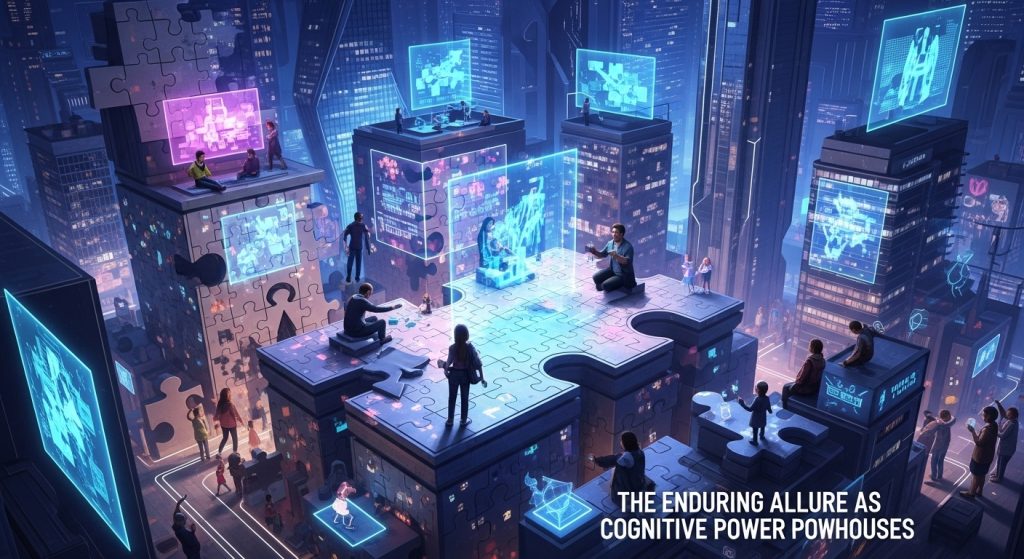
Engaging the Mind: How Technology Shapes Modern Puzzles
As we venture deeper into the digital age, traditional puzzles are finding themselves at the crossroads of innovation and creativity. The rise of technological platforms has breathed new life into brain teasers, enabling a dynamic interplay between learning, entertainment, and cognitive enhancement. This transformation is not just about playing games; it represents a profound shift in how individuals approach problem-solving and engage their minds.
Among various innovations, one of the most exciting is the emergence of artificial intelligence (AI) in puzzle design. AI algorithms are now capable of generating increasingly complex puzzles that adapt to individual skill levels. For instance, applications powered by AI can analyze player behavior to suggest challenges that enhance their strengths or help them overcome weaknesses. This personalized approach not only elevates the gaming experience but also serves as a coach, guiding players to sharpen their critical thinking and analytical skills.
Besides AI, the incorporation of gamification techniques is revolutionizing how puzzles are perceived. By introducing elements such as points, badges, and leaderboards to traditional brain teasers, apps are encouraging engagement that extends beyond mere engagement. Players find themselves immersed in progress-driven experiences that motivate them to tackle new challenges, community-solving sessions, or even timed competitions. This societal aspect allows participants to not only improve but also share strategies with a broader audience, enhancing the communal learning experience.
- Cloud Gaming: Platforms that utilize cloud services allow players to access intricate puzzles from any device with an internet connection, democratizing access to high-quality challenges. This means that complex virtual games can be played without requiring costly hardware, breaking down barriers to entry for participants across various demographics.
- Interactive Storytelling: The merging of narrative elements with puzzle-solving is gaining traction. Games like “The Witness” and “Return of the Obra Dinn” immerse players in rich storylines, where the resolutions of puzzles significantly drive the plot forward. This not only engages players cognitively but emotionally as well.
- Sensory Experiences: With technological advancements in haptics and sound design, players can now experience puzzles in ways that appeal to multiple senses. This can create a more rewarding and engaging experience as individuals work to solve challenges that are not purely visual or intellectual.
Furthermore, the future of puzzles is increasingly intertwined with social media integration, allowing puzzles to be shared, discussed, and collaboratively solved. This not only democratizes puzzle-solving but also facilitates a vibrant community that thrives on collaboration and shared discovery. The way users engage with puzzles is evolving, making them not just isolated activities but social events where learning is collaborative and strategic.
As we look forward, the implications of these technological advancements are significant. The advent of sophisticated puzzle formats heralds a future where brain teasers are not merely a means of entertainment but essential tools for developing critical cognition and collaboration skills. In this era of connectivity and innovation, the pursuit of puzzle-solving is poised to become an even more rich, vibrant, and communal experience.
| Advantages | Technological Innovations |
|---|---|
| Enhanced Engagement | Innovative game designs incorporate immersive visuals and interactive elements, increasing player interest. |
| Accessibility | Virtual platforms eliminate geographical barriers, allowing diverse participation and engagement worldwide. |
| Skill Development | Brain teasers foster cognitive skills, problem-solving abilities, and critical thinking amongst players. |
| Community Building | Online games create a platform for players to interact, share tips, and foster a culture of collaboration. |
As the landscape of brain teasers continues to evolve, technological innovations pave the way for more enriching virtual gaming experiences. With a focus on enhanced engagement, developers are integrating cutting-edge designs that captivate players beyond traditional game formats. Advances in AI technology lead to increasingly tailored experiences, ensuring that each player faces unique challenges compatible with their skill levels.Moreover, these innovations encourage accessibility like never before, breaking geographical barriers and inviting global participation. As players connect from different corners of the world, they contribute to a vibrant community that thrives on shared knowledge and experiences.Additionally, engaging with brain teasers provides numerous skill development opportunities. Players can hone their cognitive skills, critical thinking, and problem-solving abilities—all while having fun. Furthermore, the community aspect of virtual games allows players to build networks, exchanging tips and strategies as they navigate through challenging puzzles together. Through collaboration, players can transform an individual endeavor into a community-driven adventure, enhancing the overall gaming experience.
DISCOVER MORE: Click here to learn how puzzles enhance your problem-solving skills
Transformative Trends: The Evolution of Puzzle Ecosystems
The evolution of brain teasers through technology also beckons a deeper understanding of how virtual reality (VR) is reshaping the gaming landscape. With the continued sophistication of VR technology, players can now step into immersive worlds where solving puzzles becomes a tactile experience. In these environments, users are not merely observers but active participants, engaging their senses and spatial awareness to navigate challenges. An example of this can be seen in games like “I Expect You to Die,” where players solve escape-room-style puzzles within a fully realized 3D space. This revolutionary mode of engagement transforms puzzles into captivating adventures, magnifying their appeal across a diverse audience.
Moreover, augmented reality (AR) is another innovative frontier expanding the realm of brain teasers. By overlaying digital elements onto the real world, AR facilitates interactive experiences that blend physical and virtual environments. Applications such as “Pokémon GO” have illustrated the potential of AR-driven puzzles, where users collect virtual creatures while solving riddles that encourage exploration of their surroundings. Such AR puzzles stimulate both mental and physical activity, effectively reshaping traditional modalities into hybrid formats that attract people from various backgrounds.
In addition to VR and AR, the emergence of blockchain technology is introducing a new layer of authenticity and value to digital puzzles. Blockchain allows for unique ownership and provenance of in-game assets, creating opportunities for creators and players alike. Puzzle enthusiasts can now buy and sell limited edition puzzles and artifacts, creating a marketplace that connects digital challenges with real-world value. This not only incentivizes creators to develop innovative content but also fosters a dedicated community passionate about collecting and solving.
The growing popularity of mobile applications that host vast libraries of puzzles has also contributed significantly to the sector. More than just individual challenges, these apps often incorporate daily brain teasers, timed competitions, and social sharing features that keep users continually engaged. Platforms like “Lumosity” and “Peak” elevate brain training into an art form, where users can monitor their progress over time, reinforcing the sense of achievement and satisfaction that comes from mastering cognitive challenges.
Another vital trend in brain teasers is the concept of crowdsourced puzzles, leveraging community input to create collaborative content. Websites and platforms dedicated to user-generated puzzles encourage a sense of ownership among contributors, allowing individuals to not only solve puzzles but also become creators themselves. This democratization of content encourages diverse perspectives and idea exchanges, enriching the puzzle landscape with unique challenges often not available in conventional formats.
Looking ahead, the landscape of brain teasers will continue to be shaped by evolving technologies and shifting player demographics. With an increasing focus on cognitive health and mental wellness, puzzles are being recognized not just as entertainment but also as tools for fostering brain development and cognitive resilience. As the lines blur between education and entertainment, the future of brain teasers stands as a testament to humanity’s persistent pursuit of knowledge through innovative means.
EXPLORE MORE: Click here to unlock the secrets of enhancing your cognitive skills
Embracing the Future of Brain Teasers
As we traverse the dynamic landscape of brain teasers, it’s evident that technological innovations are not merely enhancing the gaming experience but are revolutionizing the ways we engage with puzzles. With the continuous advancements in virtual reality (VR) and augmented reality (AR), players are being provided with environments that offer immersive and interactive challenges. These innovations go beyond simple entertainment, positioning brain teasers as critical tools for cognitive development, and appealing to a broad spectrum of audiences.
The integration of blockchain technology ensures a new depth of engagement, allowing for the ownership and authenticity of in-game assets. This not only encourages a vibrant marketplace for puzzle enthusiasts but also stimulates a creative discourse among developers and players. Meanwhile, the rise of mobile applications has made brain teasers accessible, promoting daily engagement and a culture of continual learning.
The trend towards crowdsourced puzzles exemplifies the power of community and collaboration, enriching the puzzle landscape with diverse perspectives. As these elements converge, we find ourselves on the cusp of a new era where puzzles are recognized not just for their entertainment value but also for their substantial contributions to cognitive wellness.
Looking forward, the fusion of education and entertainment will likely thrive as we continue to navigate through these innovations. With each brain teaser, we embrace not just a challenge, but an opportunity to sharpen our minds and discover new realms of possibility. The future of brain teasers promises excitement, growth, and a deeper understanding of the cognitive capabilities that define our humanity.