The Cognitive Benefits of Puzzle Challenges for All Ages
The Cognitive Benefits of Engaging with Puzzles
In today’s fast-paced world, where information is abundant and distractions are numerous, the significance of maintaining cognitive health cannot be overstated. One of the most accessible and enjoyable ways to engage the brain is through puzzles. These intriguing challenges can serve as a powerful cognitive workout, improving mental agility across various age demographics. The advantages of puzzle-solving span from the early developmental stages of *toddlers* to the more reflective years experienced by *seniors*, making this pastime a universal tool for enhancing mental faculties.
- Improved Problem-Solving Skills: Solving puzzles encourages individuals to employ critical thinking and strategic planning. For instance, while working on a jigsaw puzzle, one must analyze piece shapes and colors, developing the ability to categorize and synthesize information effectively.
- Enhanced Memory: Engaging with puzzles stimulates diverse brain areas, which can aid in memory retention. Activities such as crossword puzzles challenge players to recall vocabulary and definitions, strengthening both short-term and long-term memory.
- Increased Concentration: To successfully complete a puzzle, players often need to immerse themselves in the task at hand. This focused engagement can lead to an improved attention span, beneficial not only in puzzle-solving but also in daily activities that require sustained concentration.
The cognitive stimulation provided by puzzles is supported by various studies suggesting that consistent engagement may help delay the onset of cognitive decline in older adults. Moreover, children who regularly tackle puzzles often demonstrate enhanced *spatial reasoning skills*, which are vital for success in fields such as mathematics and science. For example, studies have shown that young students who engage with 3D puzzles during learning often exhibit improved performance in geometry assessments due to their enhanced ability to visualize spatial relationships.
Puzzles come in diverse forms, each catering to unique preferences and skill levels. Some popular types include:
- Jigsaw puzzles, which promote visual-spatial abilities
- Crossword puzzles that enhance vocabulary and general knowledge
- Sudoku, which sharpens logical reasoning
- Logic puzzles that challenge deductive reasoning skills
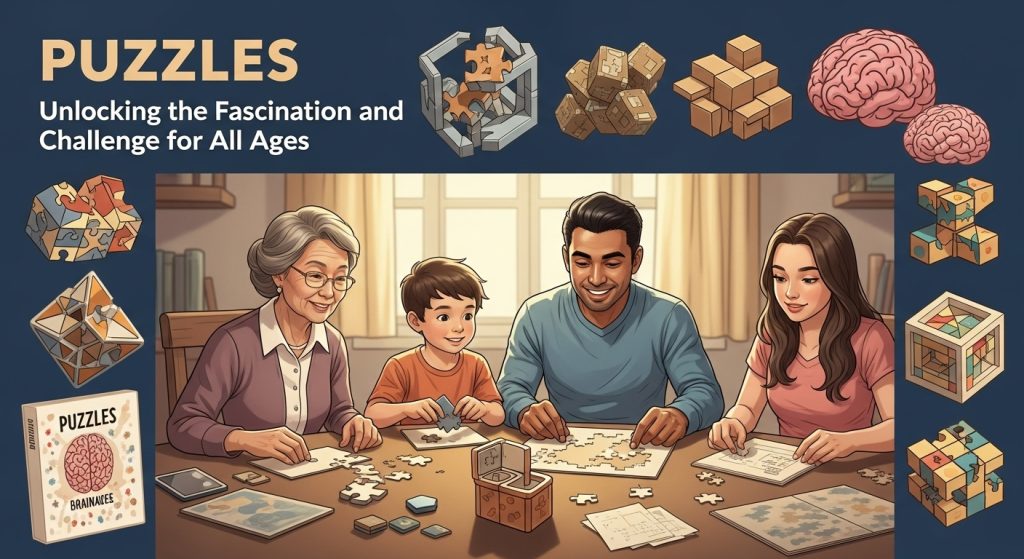
Beyond cognitive development, engaging with puzzles fosters social connections. Families may gather around a jigsaw puzzle, or friends can challenge one another with sudoku competitions. This communal aspect adds a layer of enjoyment and collaboration to the puzzle-solving experience. As individuals embark on these stimulating journeys, they not only enhance their creativity and logic but also cultivate relationships through shared experiences. Thus, puzzles provide a marvelous combination of entertainment and mental exercise, proving to be a valuable asset for individuals of all ages.
With the myriad of benefits that puzzles offer, it’s clear that incorporating them into one’s routine could lead to transformative cognitive enhancements and promote a culture of lifelong learning.
DIVE DEEPER: Click here to enhance your memory techniques
Cognitive Growth through Diverse Puzzle Formats
Puzzles are not just a leisurely pursuit; they serve as robust tools for cognitive enhancement across all ages. The diversity in puzzle formats ensures that there is something suitable for everyone, be it young children beginning their educational journey or adults seeking to sharpen their mental acuity. Engaging with these challenges can enrich cognitive abilities while also providing a sense of accomplishment and enjoyment.
One of the most significant benefits of puzzles lies in their capacity to enhance problem-solving skills. When individuals tackle different types of puzzles, they must dissect complex problems into manageable parts. This analytical approach fosters a deeper understanding of how to approach challenges both in and out of the puzzle realm. For example, when working on a logic puzzle, players engage their critical thinking skills by identifying patterns and making deductions. Such cognitive exercises not only develop essential life skills but also increase confidence in making decisions.
Puzzles demand sustained attention, making them excellent tools for increasing concentration. As individuals immerse themselves in solving a puzzle, they learn to tune out distractions. A study conducted by the University of California found that adults who frequently engage in puzzle-solving activities improve their attention spans significantly over time. This heightened focus can translate into other areas of life, such as work or academic settings, where multi-tasking is often a necessity.
Moreover, puzzles are particularly beneficial in enhancing memory. Activities such as crossword puzzles require players to retrieve information from memory, thereby exercising the brain’s natural ability to store and recall data. Additionally, children who regularly engage with puzzles are found to have better overall memory retention, which can be instrumental in their academic success. The process of remembering information to solve a puzzle challenges the brain and ultimately bolsters cognitive function.
Aside from improving memory and problem-solving capabilities, puzzles can also aid in the development of spatial awareness, particularly among children. This aspect is crucial as spatial reasoning skills are linked to proficiency in subjects such as mathematics and science. For instance, engaging with three-dimensional puzzles can significantly enhance children’s abilities to visualize spatial relationships, which is essential for understanding geometry in school. Studies suggest that such early experiences with puzzles can produce long-term benefits, positioning children for academic success as they grow.
- Jigsaw puzzles: These promote visual-spatial abilities and teamwork when done in groups.
- Crossword puzzles: They enhance vocabulary and can stimulate conversations around language.
- Sudoku: This number-based game fosters logical reasoning, appealing to those who enjoy numerical challenges.
- Logic puzzles: They engage deductive reasoning skills and are perfect for those who enjoy philosophical and abstract thinking.
The benefits extend well beyond individual cognitive improvement. As families come together over a jigsaw puzzle or friends bond over a competitive sudoku match, they create a shared experience that promotes social interaction. These moments enhance relationships and strengthen social bonds, proving that puzzle-solving is not merely a solitary task but a communal activity that can enrich lives.
| Category | Description |
|---|---|
| Cognitive Development | Engagement in puzzle challenges enhances critical thinking, problem-solving, and spatial awareness skills. |
| Mental Agility | Puzzles promote quick thinking and adaptability, sharpening the brain’s ability to process information efficiently. |
| Reduction of Cognitive Decline | Regular engagement with challenging puzzles can help fend off memory-related issues and cognitive decline as we age. |
| Social Interaction | Working on puzzles with friends or family strengthens social bonds, creating a shared sense of achievement. |
Participating in puzzle challenges offers profound cognitive benefits for individuals of all ages, making them an effective tool for mental engagement. At its core, puzzle solving stimulates the brain, fostering neural connections that enhance learning and understanding. This cognitive workout encourages creativity and improves concentration, crucial for students and professionals alike. Furthermore, puzzles can serve as a delightful pastime that promotes relaxation and stress relief. Engaging in this mental activity can lower anxiety levels and distract from daily pressures, nurturing emotional well-being alongside cognitive health. The benefits do not diminish with age; rather, staying mentally active through puzzles can lead to a more resilient mindset for older adults. In this rapidly changing world, the importance of keeping the mind sharp through consistent mental challenges cannot be overstated. Dive into the world of puzzles to uncover their potential and see firsthand how they make learning and leisure an interconnected journey.
DISCOVER MORE: Click here to delve deeper
The Social and Emotional Impact of Puzzle Engagement
In addition to the cognitive advantages, puzzles also hold significant social and emotional benefits for individuals of all ages. Engaging in puzzle activities can transform solitary experiences into cherished moments of connection. For families, a jigsaw puzzle can become the centerpiece for quality time, as members gather around the table to collaborate and communicate. This social interaction fosters a sense of belonging and teamwork, which is especially vital for children as they learn essential social skills. In fact, research conducted by the American Psychological Association indicates that family bonding activities, including puzzle-solving, are critical for developing strong familial relationships and emotional well-being.
Furthermore, the act of solving puzzles can be incredibly therapeutic. Many people find that engaging with puzzles provides an escape from daily stressors, allowing for a meditative focus that can alleviate anxiety. The University of Virginia found that individuals who regularly participated in puzzle-solving reported lower levels of stress and increased feelings of relaxation. This is due in part to the focus and concentration required to solve puzzles, which removes distractions and promotes mindfulness—an essential component in achieving emotional balance.
Moreover, puzzles can assist in enhancing patience and resilience. The challenge of piecing together a complicated puzzle or deciphering a tough crossword teaches individuals, particularly children, the importance of perseverance. Overcoming obstacles, whether they are small pieces that just don’t seem to fit or clues that are particularly elusive, helps instill a growth mindset. As participants learn to navigate frustrations that arise from puzzle challenges, they develop better coping strategies that can be applied in real-life situations.
The Role of Puzzles in Lifelong Learning
Puzzle-solving is not just a childhood pastime; it serves as a vital component of lifelong learning. Adults and seniors, in particular, can greatly benefit from staying mentally engaged through puzzles. It is well-documented that cognitive decline can be mitigated through continuous mental stimulation. The Alzheimer’s Society reports that individuals who partake in mentally challenging activities, such as puzzles, may delay the onset of dementia-related symptoms. This highlights the importance of incorporating puzzles as a routine activity, not just for enjoyment, but as a preventative measure against cognitive decline.
Seniors can also enjoy the emotional benefits of puzzles, promoting a sense of purpose and accomplishment. Particularly, group-based puzzles can foster camaraderie among individuals in assisted living facilities or community centers. Engaging with others in collaborative puzzle-solving not only encourages social interaction but also serves as a stimulating mental exercise. In some cases, specific programs aimed at using puzzles as therapeutic tools have shown promising results; facilities report improved mood and interactivity among residents.
Additionally, some modern technological advancements have harnessed the popularity of puzzle challenges by creating applications and online platforms that cater to a wide audience. Digital puzzles introduce innovative features such as interactive multiplayer modes and timed challenges, enhancing the social experience while preserving cognitive benefits. This era of digitization provides older adults an easy entry point into the world of technology and puzzle-solving, further connecting generations and fostering interactivity.
As diverse as the puzzles may be, the core benefits remain consistent: the mental, emotional, and social fortitude that accompanies the pursuit of puzzle challenges forms a strong foundation for cognitive growth, transcending age barriers. With a little patience and persistence, anyone can unlock the myriad of advantages that puzzles have to offer.
DISCOVER MORE: Click here to challenge your mind
Conclusion: Embracing the Puzzle Pursuit for Cognitive Wellness
As we have explored, the cognitive benefits of puzzle challenges extend far beyond mere entertainment—they are fundamental to enhancing mental acuity and promoting emotional well-being across all age groups. From sharpening problem-solving skills and improving memory to fostering social connections and resilience, puzzles serve as a multifaceted tool in lifelong learning and development. For children, the value lies in nurturing creativity and collaborative skills, while for adults and seniors, puzzles provide essential mental exercise that may stave off cognitive decline and enrich social interactions.
Moreover, the therapeutic aspects of puzzle-solving cannot be overlooked. Engaging in these activities cultivates mindfulness, which is increasingly crucial in our fast-paced world filled with distractions. Whether it is a traditional jigsaw puzzle on a family game night or an interactive app connecting friends across distances, the central premise remains: puzzles can be a bridge linking generations and strengthening relationships.
The ongoing digital transformation in puzzle-solving offers exciting opportunities to reach even broader audiences, ensuring that the art of puzzling remains relevant in contemporary society. As we prioritize our mental health and social well-being, integrating puzzles into our daily routines emerges not only as a leisure activity but also as a proactive strategy for enhancing cognitive resilience. Thus, regardless of age, embracing the challenge of puzzles could unlock not just deeper cognitive functions but also a more connected, fulfilled life. So why not pick up a puzzle today? The benefits await!