
The Cognitive Benefits of Logical Puzzles: Stimulating the Mind and Improving Problem Solving

The Cognitive Revolution: Delving Deeper into Logical Puzzles
Cognitive skills play an indispensable role in our everyday lives, influencing everything from academic success and workplace efficiency to personal relationships and decision-making. By engaging with logical puzzles, individuals can not only occupy their time but also embark on a journey of mental development. These puzzles are designed to stimulate the brain, challenging us to think critically and strategically, thereby enhancing our overall cognitive abilities.
One of the standout cognitive benefits of solving logical puzzles is the development of enhanced critical thinking. This skill is not merely about how to arrive at an answer; rather, it is about evaluating the information presented, identifying patterns, and making informed decisions based on observations. For instance, when faced with a logic grid puzzle, one must sift through various clues and options to deduce relationships. This practice ultimately sharpens one’s ability to dissect complex problems in real-world scenarios, such as making business decisions or analyzing news reports critically.
In addition to critical thinking, logical puzzles can lead to improved memory. Engaging in bracing brain teasers boosts brain plasticity, which directly contributes to superior recall and retention abilities. A simple yet effective way to illustrate this is through memory games or crossword puzzles. Consistent practice can make it easier for individuals to remember names, dates, and important information—an essential skill whether you are a student navigating through a semester or a professional attending meetings and conferences.
- Boosted creativity: The process of solving puzzles often leads to innovative thinking and novel solutions. By thinking outside the box, individuals are encouraged to develop inventive approaches to challenges.
Moreover, the act of piecing together puzzles can also bolster creativity. Many logical puzzles require out-of-the-box thinking that encourages solvers to approach problems from various angles. This innovative thought process is critical in many fields, such as engineering, marketing, and even the arts, where new ideas must continuously evolve. For example, the realm of design, whether it be interior, graphic, or product design, benefits greatly from puzzle-solving by fostering a mindset that embraces experimentation and unconventional solutions.
Evidence from various research studies suggests that individuals who regularly engage in these challenges tend to display improved analytical skills and increased mental flexibility. Such cognitive enhancements could potentially lead to a lower risk of cognitive decline in later ages, cementing the significance of making logical puzzles a habitual practice.
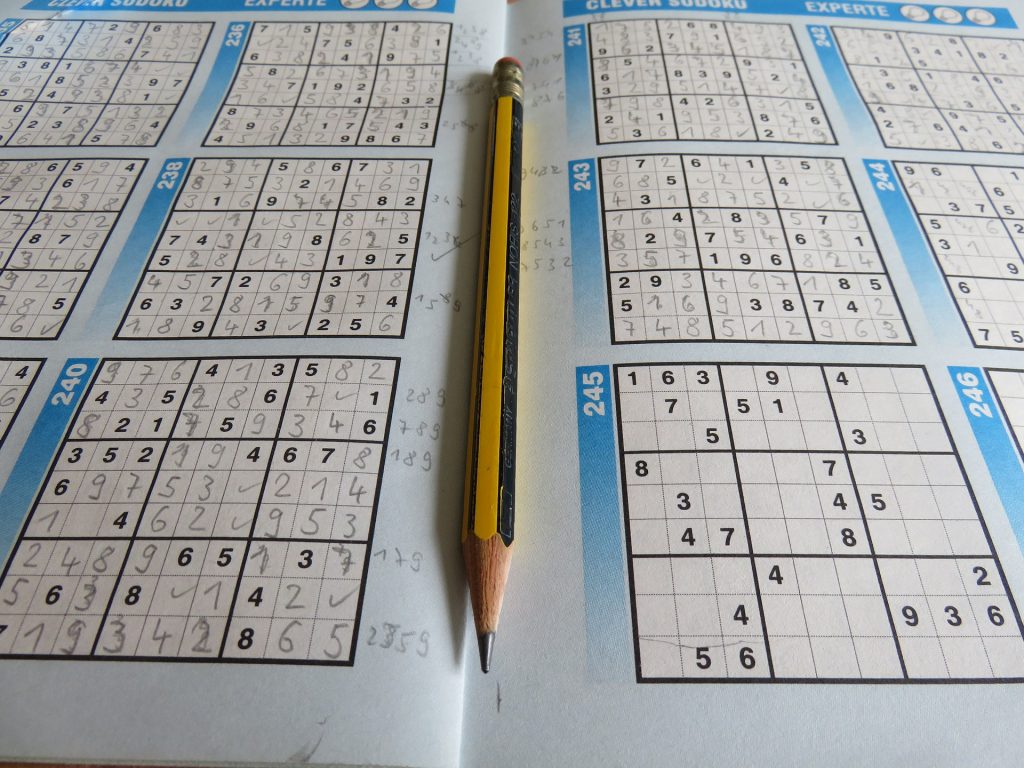
As society increasingly prioritizes cognitive fitness, incorporating these brain workouts into daily life can yield substantial benefits. Whether diving into Sudoku during a morning commute or tackling a crossword in a cozy cafe, there’s a form of logical puzzle suitable for everyone. Regardless of age or profession, embracing the challenge of logical puzzles not only provides an enjoyable pastime but also serves as a powerful tool for mental fortification, ensuring we stay sharp and engaged in an ever-evolving world.
DIVE DEEPER: Click here to discover how brain teasers can enhance your mental well-being</
Unlocking the Potential of Logical Thinking
To fully appreciate the cognitive benefits of logical puzzles, one must explore how these seemingly simple activities can lead to profound developments in various mental faculties. Engaging with puzzles, such as Sudoku, logic grids, and riddles, serves as a training ground for the brain, enabling individuals to enhance their problem-solving skills in imaginative ways. This mental engagement fosters a unique environment where users are encouraged to thrive on challenges, leading to improvements not only in their logical reasoning but also in other essential cognitive domains.
One major area of growth attributed to solving logical puzzles is mathematical reasoning. Many logical puzzles require players to apply basic mathematical concepts subtly woven into complex scenarios. For example, in a classic Sudoku puzzle, understanding numerical patterns and relationships is vital to successfully filling in the grid. Such engagement reinforces numerical fluency, which is a key skill in academic and professional realms alike. Research indicates that individuals who regularly solve logic-based puzzles often show increased aptitude in mathematics, correlating with higher levels of academic achievement.
Additionally, when tackling logical challenges, an individual is compelled to engage in metacognition, which refers to the awareness and understanding of one’s own thought processes. This self-reflective aspect of solving puzzles allows individuals to assess their reasoning strategies and modify their approaches if necessary. For instance, a puzzler might find themselves stuck on a question, leading them to reconsider the clues or methods they are using to reach a solution. This form of self-regulation not only nurtures stronger cognitive skills but also increases confidence and resilience in problem-solving scenarios.
- Better decision-making: Logical puzzles often mimic real-life situations that require swift and accurate decision-making. The ability to evaluate multiple conditions and potential outcomes strengthens one’s ability to make informed choices.
- Heightened concentration: The carefully constructed nature of logical puzzles demands focus and attention to detail, essential skills not only in puzzle-solving but also in daily life activities, from studying to executing professional tasks.
- Increased perseverance: Encountering challenges while solving puzzles teaches individuals the value of persistence. It helps build mental stamina and fosters a growth mindset wherein setbacks are viewed as opportunities for learning rather than failures.
Moreover, engaging in these mental exercises allows individuals to experience a sense of accomplishment upon completing a particularly challenging puzzle. This feeling of achievement releases dopamine—the ‘feel-good’ hormone—which in turn reinforces productive behaviors. Regularly immersing oneself in logical puzzles can become a fulfilling practice that bolsters emotional well-being, alongside cognitive enhancement. As one becomes more adept at solving intricate puzzles, they not only sharpen their mind but also cultivate a stronger sense of purpose and motivation.
With an increasing number of studies correlating puzzle-solving with mental agility and resilience, the evidence suggests that dedicating time to these exercises can profoundly impact overall cognitive health. Incorporating logical puzzles into your routine can thus not only serve as a source of entertainment but also as a strategic investment in your cognitive future.
| Category | Advantages |
|---|---|
| Cognitive Engagement | Engaging with logical puzzles significantly enhances cognitive functions by stimulating critical thinking and analytical skills. This form of mental exercise can activate different areas of the brain responsible for decision-making and problem-solving. |
| Memory Improvement | Regularly solving logical puzzles sharpens memory retention and recall. Challenging tasks require you to store information efficiently, which can contribute to improved memory capacity. The act of recalling information enhances mental agility and overall cognitive health. |
| Stress Reduction | Participating in logic puzzles can serve as a form of entertainment and distraction from daily stressors. Focusing on these activities can lead to a mental break and lower anxiety levels, promoting a better overall mood. |
| Social Interaction | Many logical puzzles can be approached collaboratively, fostering social interaction. Discussing strategies and solutions enhances group dynamics and promotes team-building skills, critical for real-world problem-solving. |
DIVE DEEPER: Click here to discover essential tips
Building Cognitive Flexibility Through Challenges
In addition to honing problem-solving skills and enhancing logical reasoning, logical puzzles significantly contribute to developing another profound cognitive ability—cognitive flexibility. This mental skill refers to one’s capacity to switch between thinking about different concepts or to think about multiple concepts simultaneously. In our rapidly changing world, cognitive flexibility has become increasingly valuable, enabling individuals to adapt to new situations, solve unforeseen problems, and embrace innovative ideas.
Engaging with logical puzzles encourages out-of-the-box thinking. For instance, a puzzle like nonograms, which require players to fill in squares based on numerical clues, challenges solvers to visualize abstract patterns and connections. This exercise not only promotes creativity but also allows for multiple approaches to a single problem. As people navigate various methods and strategies, they strengthen their ability to pivot when faced with obstacles—an essential skill both in personal and professional contexts.
Moreover, the iterative nature of puzzle-solving reinforces the importance of trial and error. With each attempt at solving a puzzle, individuals learn to reassess their previous methodologies and explore alternate routes. Research highlights that this iterative process enhances brain connectivity, particularly in areas related to decision-making and logical thinking. By embracing mistakes as opportunities for growth, puzzlers nurture a mindset that is more resilient and better equipped to handle life’s complexities.
- Cross-disciplinary skills: Logical puzzles foster skills that transcend academic boundaries. Individuals who engage with puzzles may excel not only in mathematics but also in disciplines such as science, engineering, and even literature. The abstract reasoning developed through puzzles complements the critical thinking necessary for these diverse fields.
- Social cognition: Collaborative puzzle-solving scenarios, such as escape rooms or team-based logic challenges, enhance interpersonal skills while requiring individuals to convey ideas clearly and effectively. As they share insights and work together to reach solutions, team members develop deeper social awareness and improve their communication skills.
- Memory retention: Logic puzzles can also serve as an effective tool for enhancing memory retention. Many puzzles incorporate temporal sequences or require remembering previous clues, improving both working and long-term memory capabilities. As cognitive scientists frequently point out, regular brain training through puzzles leads to improved recall, particularly in older adults.
Furthermore, many individuals have reported increased productivity and efficiency in their daily tasks as a direct result of engaging in logical puzzles. This can be attributed to heightened focus and attention, which are critical to thriving in our multitasking lives. As puzzle-solvers establish and hone their capacity to concentrate on intricate details, they find themselves carrying this attention into their work and personal undertakings.
Regardless of age or background, immersing oneself in logical puzzles offers an enriching experience that transcends mere entertainment. By consistently challenging the brain and fostering new connections, individuals cultivate cognitive advantages that yield lasting benefits throughout their lives. From improving academic performance to navigating complex life challenges, the cognitive benefits of logical puzzles serve as a profound reminder of the mind’s potential and resilience.
DISCOVER MORE: Click here to unlock the power of logic riddles
Conclusion: Unlocking Mental Potential Through Puzzles
In a world that demands quick thinking and innovative solutions, the cognitive benefits of logical puzzles cannot be overstated. Engaging with these challenges not only sharpens problem-solving skills but also enhances essential mental faculties such as cognitive flexibility and memory retention. As the research indicates, regularly tackling puzzles can lead to improved decision-making abilities and a sharper focus, both of which are invaluable in today’s fast-paced environments.
Moreover, the iterative process inherent in puzzle-solving fosters a growth mindset, teaching individuals to embrace mistakes and view them as learning opportunities. This transformative approach cultivates resilience and adaptability—two qualities that are crucial in personal and professional settings. Social dimensions—such as collaboration and communication—are also nurtured through group puzzle activities, further enriching the overall experience.
For anyone looking to enhance their cognitive prowess, incorporating logical puzzles into daily routines promises not only entertainment but also lasting mental agility. Whether you are a student, a professional, or simply someone seeking to stimulate your brain, the act of solving these intricate challenges opens doors to a deeper understanding of oneself and the world. As you engage with each puzzle, you are not just solving a problem; you are actively training your mind to tackle the complexities of life with confidence and creativity.
Ultimately, the journey of puzzle-solving serves as a powerful reminder of the mind’s incredible potential. As we navigate through a world increasingly reliant on critical thinking and innovation, those who embrace logical puzzles are undoubtedly better equipped to thrive.