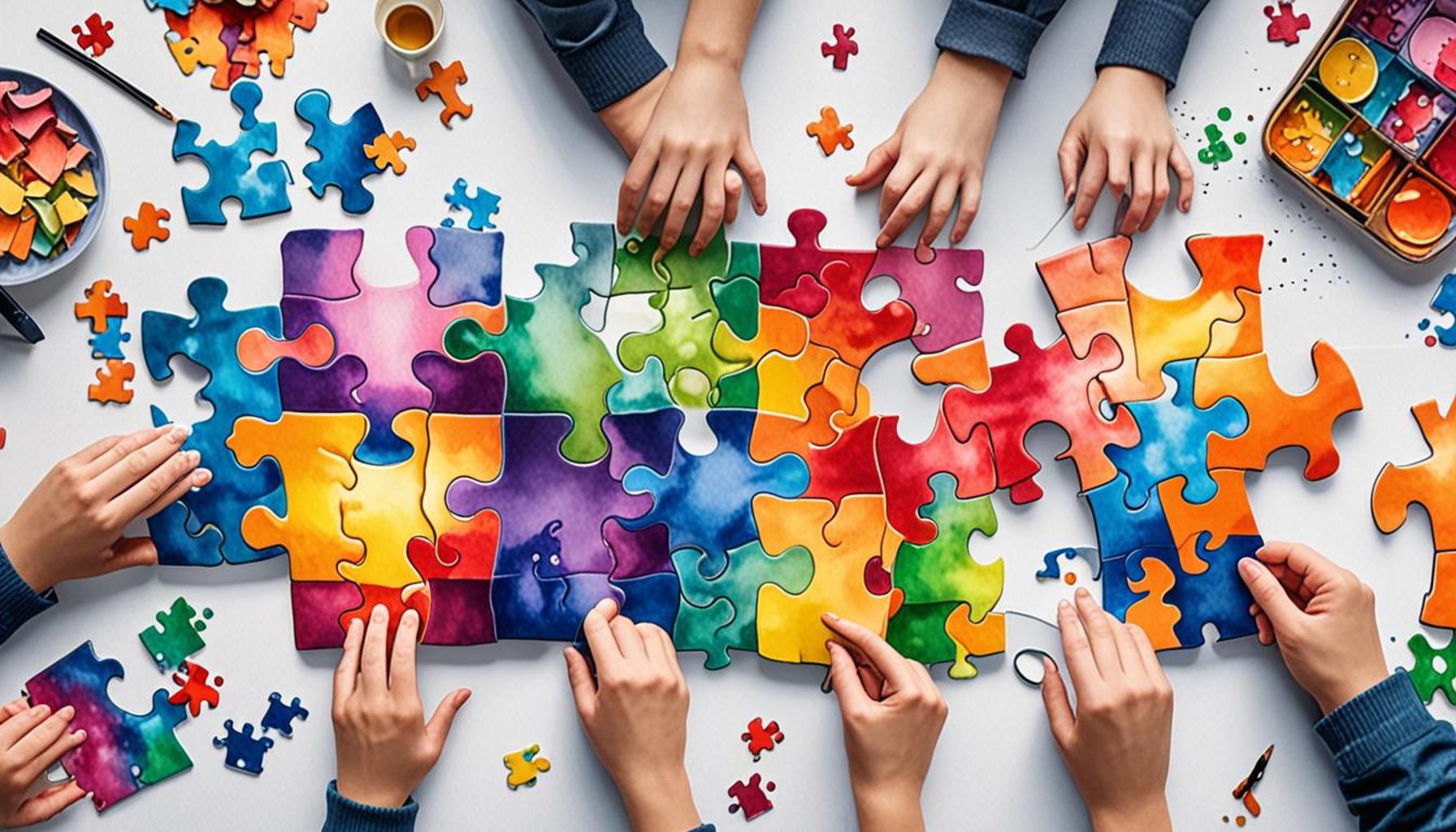
Puzzles and Artificial Intelligence: The Future of Cognitive Challenges

The Evolution of Cognitive Challenges Through AI
The landscape of cognitive challenges is witnessing a remarkable transformation, driven largely by the capabilities of artificial intelligence (AI). This technology is not only redefining the way puzzles are created and consumed but is also changing our everyday interaction with problem-solving tasks. When we talk about puzzles, we are venturing beyond traditional crosswords and Sudoku; we are diving into dynamically generated challenges that can adapt to the individual user’s skill level in real time.
AI-generated puzzles leverage advanced algorithms and machine learning to create customized experiences for users. Imagine playing a Sudoku game where the difficulty level adjusts automatically based on your responses. If you quickly solve a six-digit puzzle, the next one might be an eight-digit challenge, tailored precisely to enhance your mental agility. This personalized approach to learning makes cognitive exercises more engaging and effective, catering directly to the user’s needs.
Furthermore, the use of automated tutors in guiding users through complex brain teasers represents a significant advancement in cognitive education. These AI-driven platforms can analyze a player’s problem-solving techniques, offering hints and strategies based on real-time performance. For instance, if a user struggles with logic puzzles, the tutor can provide prompts that simplify the concepts and enhance understanding, making learning not just accessible, but also enjoyable.
In addition, the integration of data-driven analytics into puzzle-solving reveals intriguing patterns about human cognition. By logging user performance and tracking common pitfalls, researchers can glean valuable insights into how people think, learn, and solve problems. This data can inform the development of enhanced teaching strategies, leading to significant advancements in educational systems across the United States.
The future possibilities as these technologies continue to evolve are expansive. They include:
- Personalized learning experiences that foster a deeper understanding of complex subjects through gamified challenges.
- New forms of interactive entertainment that combine storytelling with puzzle solving, enticing players to engage in rich narratives while enhancing cognitive skills.
- Innovative approaches to cognitive training that can be utilized in personal development, rehabilitation, and professional environments to boost critical thinking and problem-solving abilities.
Ultimately, the intersection of AI and puzzles is poised to revolutionize our approach to education and mental challenges. As we navigate this exciting frontier, important questions arise: How will these advancements redefine our understanding of intelligence and cognitive development? What innovative learning frameworks will emerge to meet the demands of a rapidly changing technological landscape? The answers to these questions may very well reshape our educational practices and redefine how we interact with knowledge in an AI-driven world.
DIVE DEEPER: Click here to uncover the evolution of brain teasers
AI-Driven Innovation in Puzzle Design
The design and implementation of puzzles are being profoundly transformed by artificial intelligence, enabling the creation of challenges that are not only captivating but also highly intelligent. One of the most remarkable aspects of this evolution is the ability for AI algorithms to analyze user behavior and performance patterns, leading to the generation of puzzles that are uniquely suited to individual preferences. This nuanced understanding allows for the crafting of cognitive challenges that aren’t just random, but thoughtfully designed to push users’ mental faculties in just the right way.
The traditional approach to puzzle solving often resulted in a one-size-fits-all experience, where puzzles offered a fixed level of difficulty. This rigid format could be frustrating for learners and casual solvers alike. However, with the integration of AI, there is now an opportunity to implement a dynamic difficulty adjustment. For example, in a trivia game powered by AI, if a user answers a series of questions correctly, the system can escalate the complexity, introducing categories that require deeper knowledge or critical thinking skills. Conversely, if a player struggles, the AI can lower the difficulty, creating a balanced, effective learning environment.
Moreover, the scope of cognitive challenges extends beyond single-player experiences. With the advent of AI, new multiplayer puzzle formats are emerging that incorporate not just competitive elements but also collaborative features. AI-facilitated platforms enable teams of users to tackle brain teasers together, fostering communication and cooperation. This social interaction is a vital component in learning, as it allows participants to share strategies and insights, enhancing collective problem-solving skills.
In examining these AI-driven innovations, it is essential to recognize the role of gamification in cognitive puzzle design. By incorporating game mechanics such as scoring, achievements, and progression tracking, puzzle experiences are becoming increasingly engaging. This approach not only motivates users to participate but also reinforces learning through repetition and reinforcement. Research indicates that gamified learning can improve retention and applicability of knowledge, turning mundane cognitive exercises into enjoyable activities.
To illustrate the impact of AI on puzzles, consider these key advancements:
- Adaptive Learning Paths: AI systems can create personalized journey maps that adjust content based on user interaction, ensuring that individuals are consistently challenged without feeling overwhelmed.
- Feedback Loops: Immediate responses and hints provided by AI cater to users’ processing pace, allowing for tailored guidance that breaks down complex concepts into manageable parts.
- Increased Accessibility: AI tools make puzzles more accessible for individuals with disabilities by offering customizable interfaces and adjustments in content delivery.
These advancements bring us to a critical juncture: as AI continues to refine the landscape of cognitive challenges, it invites us to reconsider how we approach learning, collaboration, and intelligence itself. The question remains—not just how these innovations will enhance puzzles but also how they will redefine educational frameworks for future generations. By embracing AI technology, we are not only innovating in the realm of puzzles but also laying the groundwork for a new understanding of cognitive engagement in our ever-evolving world.
| Category | Key Features |
|---|---|
| Cognitive Enhancement | Puzzles developed with AI can adapt to the user’s skill level, ensuring a personalized and challenging experience. |
| Data-Driven Insights | Artificial intelligence analyzes user behavior, providing recommendations to improve problem-solving techniques. |
| Community Engagement | AI-driven platforms foster collaboration and competition, enhancing social interactions among users. |
| Educational Integration | AI can facilitate learning through puzzles that teach logic and reasoning in engaging ways. |
In exploring the realm of puzzles and Artificial Intelligence, it’s evident that these cognitive challenges are being revolutionized. The ability of AI to adaptively respond to individual capabilities allows each user to engage with puzzles that are neither too easy nor overwhelmingly difficult, fostering a deeper level of cognitive enhancement. Furthermore, the data-driven insights provided through user interactions can significantly improve individual puzzle-solving techniques, creating tailored learning experiences.Moreover, the integration of these technologies promotes community engagement. Platforms harnessing AI capabilities enable users to connect, collaborate, and compete, enhancing the social aspects of puzzle-solving. This community interaction adds another dimension to cognitive challenges, making them not just personal endeavors but shared experiences.The educational sector stands to gain tremendously from these advancements. AI’s capacity to curate puzzles that sharpen logic and reasoning skills positions it as a valuable tool for educators. By incorporating these dynamically generated puzzles into learning modules, the future of cognitive challenges looks both exciting and promising—inviting enthusiasts to explore further the potential of blending traditional puzzles with cutting-edge technology.
DIVE DEEPER: Click here to discover more about enhancing your problem-solving skills</p
The Role of Machine Learning in Puzzle Evolution
As we delve deeper into the interplay between artificial intelligence and puzzles, it’s important to highlight the crucial contributions of machine learning. This subset of AI empowers systems to learn from vast amounts of data, improving the design and complexity of puzzles over time. By continuously analyzing how users interact with puzzles, AI can identify patterns and preferences, ultimately creating challenges that become progressively more engaging and sophisticated.
For instance, machine learning algorithms are capable of assessing a player’s strengths and weaknesses based on their puzzle-solving history. Such data allows the generation of customized content that not only addresses gaps in knowledge but also promotes areas of aptitude. In educational settings, this targeted approach can be particularly beneficial, leading to tailored learning experiences suited to students with varying cognitive abilities.
A notable application of machine learning is in the realm of language puzzles. Through natural language processing (NLP), AI can generate riddles and word games that reflect current vernacular and cultural trends. This ensures that the content remains strikingly relevant and relatable, while simultaneously engaging users in a meaningful way. The use of machine learning thus not only updates the material but also keeps the essence of puzzles alive, lending it a human touch that resonates with solvers.
AI-Enhanced Community Engagement
The integration of AI within puzzle design also fosters community engagement like never before. With forums and online platforms designed for puzzle enthusiasts, players can share their own creations generated through AI tools. This democratization of puzzle creation invites novices and experts alike to contribute to a vibrant ecosystem of cognitive challenges. Through this community-centric approach, users benefit from a plethora of diverse puzzles that enhance communal learning and brainstorming.
Moreover, AI facilitates real-time feedback within these communities. Leveraging user insights and interactions, AI systems can recommend trending puzzles based on collective preferences, thus ensuring that the most enjoyable and challenging experiences rise to the top. When players engage in solving puzzles together, the AI’s role in promoting beneficial interactions can significantly boost teamwork and collaboration skills, creating an environment that fosters shared problem-solving.
- Global Collaboration: AI can bridge geographical barriers, allowing users from different cultures to engage in puzzles that reflect diverse thinking styles and approaches to challenges.
- Data-Driven Trends: Tracking popular puzzles or formats over time, AI can suggest new trends or types of challenges that might evoke curiosity, thus continuously energizing the puzzle landscape.
- Cross-Platform Experiences: AI-driven puzzles are becoming compatible across multiple devices, allowing seamless transitions from mobile to desktop experiences, which enhances engagement opportunities.
As we witness these developments, it becomes clear that the underlying principles of AI are revolutionizing not just puzzle design but our very perception of intelligence itself. The ongoing fusion of machine learning and puzzle-solving elevates the potential for cognitive growth and engagement, presenting us with exciting avenues for exploration and interaction. By understanding and embracing these advancements, we move toward a future where puzzles not only entertain but enrich our cognitive abilities and social connections.
DIVE DEEPER: Click here to learn more
Looking Ahead: The Integration of Puzzles and Artificial Intelligence
As we stand on the brink of a new era in cognitive challenges, it is evident that puzzles and artificial intelligence are merging in ways that will redefine both entertainment and education. The advancements in machine learning not only allow for the evolution of puzzle design but also enable a deeply personalized experience tailored to individual strengths, weaknesses, and preferences. From language-based challenges to intricate logical conundrums, the adaptability of AI ensures that puzzles remain engaging and enriching for solvers of all ages and backgrounds.
The role of AI in fostering community engagement cannot be overstated. By breaking down geographical barriers and encouraging a collaborative atmosphere, puzzle enthusiasts can now partake in a global tapestry of ideas and creativity. This collective problem-solving not only enhances the cognitive experience but also fosters social connections that are imperative in today’s digital age.
Moreover, the prospects of data-driven trends and cross-platform experiences promise an ever-evolving puzzle landscape that will meet the demands of a diverse audience. Investigating the intersections of AI and puzzles opens up avenues for growth in cognitive skills and collaborative learning, suggesting that the future holds a wealth of untapped potential.
In conclusion, as we continue to explore the synergy between puzzles and artificial intelligence, it becomes increasingly clear that this integration will shape our understanding of cognitive challenges. The future of puzzle-solving is not just about finding solutions; it is about enriching our minds, forming connections, and fostering a love for learning that transcends generations. Now is the time to embrace this evolution and engage with the cognitive challenges that AI has to offer.