Puzzle Challenges in Teams: Fostering Collaboration and Communication in the Workplace
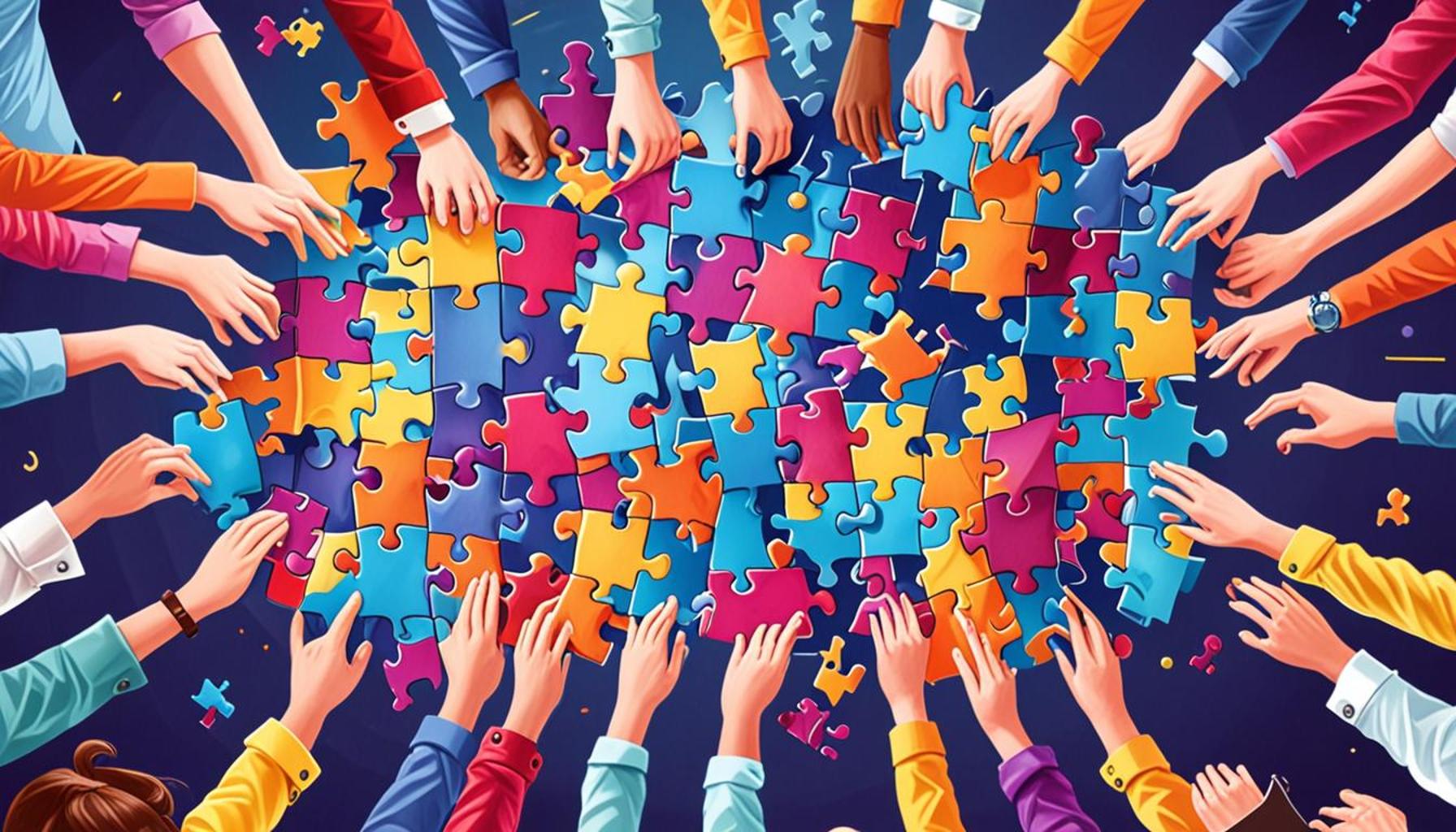
Engaging Employees Through Puzzle Challenges
In today’s fast-paced work environment, effective collaboration is the backbone of success. One creative way to enhance team dynamics is through puzzle challenges, which not only engage employees but also promote essential communication skills. These interactive and stimulating activities transform routine work into captivating experiences, fostering strong relationships among team members.
Puzzle challenges can take various forms, each designed to cater to different interests and skill sets, including:
- Escape room scenarios: Teams work together to solve a series of intricate puzzles within a set time limit to “escape” a themed room, encouraging quick thinking and teamwork.
- Logic puzzles: Engaging brain teasers and riddles that require analytical reasoning can be tackled in small teams, fostering discussions and team strategies.
- Team scavenger hunts: These outdoor or indoor hunts push employees to collaborate and harness their knowledge and skills to locate items or complete tasks based on clues.
- Online puzzle games: With the rise of remote work, virtual platforms that host team-based puzzles or games have gained popularity, allowing participation from anywhere.
Participating in these challenges can yield several crucial benefits that transcend mere fun:
- Enhanced communication: Team members learn to share ideas effectively, leading to greater clarity and understanding in everyday work situations.
- Improved problem-solving: Diverse perspectives within the team can lead to innovative solutions, particularly when facing real-world challenges in the workplace.
- Stronger relationships: Collaborating on challenges allows employees to bond over shared experiences, building trust and camaraderie that impacts workplace morale.
An enriching example is the use of escape rooms by tech companies in Silicon Valley for team building activities, where employees tackle challenges reminiscent of coding puzzles. These experiences not only enhance teamwork but also translate into improved efficiency back at the office.
As organizations in the United States continue to seek innovative ways to improve workplace dynamics, implementing puzzle challenges could be a game-changer. By integrating fun and interactive experiences into the workplace, businesses can pave the way for greater teamwork and a more cohesive culture. Furthermore, studies have shown that engaged employees are 17% more productive and 21% more profitable, indicating the potential economic benefits of investing in such initiatives. The following article will explore the various types of puzzle challenges, their impact on collaboration, and best practices for implementation, inviting you to uncover how this creative strategy can reshape your organization’s culture and approach to teamwork.
DISCOVER MORE: Click here to learn how puzzles enhance your problem-solving skills
The Impact of Puzzle Challenges on Team Dynamics
When teams engage in puzzle challenges, they not only entertain themselves but are also offered an opportunity to enhance their interpersonal skills, significantly influencing their overall performance. The unique nature of these challenges encourages employees to think outside the box, communicate ardently, and collaborate seamlessly. As the traditional workspace evolves, seeking innovative methods to bolster employee engagement becomes paramount, and puzzle challenges present a fresh and dynamic solution.
One of the primary advantages of incorporating puzzle challenges into team-building exercises is the promotion of effective communication. In puzzle scenarios, each team member brings different strengths and perspectives to the table. This diversity fosters a culture of open dialogue as participants discuss strategies, share ideas, and work together to crack codes or solve riddles. A report from the American Psychological Association highlights that workplaces that foster open communication see a 25% increase in performance. Hence, these engaging activities serve not only as a bonding experience but also as a catalyst for greater clarity among teammates when navigating everyday tasks.
Additionally, puzzle challenges can significantly enhance problem-solving abilities. As teams tackle intricate puzzles or rigorous challenges, they must draw from the collective strengths of each member, which can lead to innovative solutions. This collaborative environment encourages lateral thinking and creative strategies, allowing teams to become more adept at handling the complexities of real-world projects. Research indicates that teams that regularly engage in collaborative activities are more likely to outperform their competitors by 15%. This underscores the notion that puzzle challenges can serve as an incubator for enhanced problem-solving skills.
Team bonding is another critical component that puzzle challenges deliver. By participating in engaging activities, employees forge deeper connections and build trust, which are essential elements of a positive workplace culture. According to a Gallup survey, teams that are more cohesive experience a reduction in turnover rates by up to 50%. When employees develop interpersonal relationships through shared experiences, they are more likely to be satisfied with their jobs and committed to their organization.
The multifaceted benefits of puzzle challenges do not end there. Companies can tailor these games to fit their organizational culture, addressing specific team challenges while fostering unity. Engaging employees through customized experiences can provide rich data on team dynamics, allowing managers to identify areas for improvement in collaboration and communication.
Firms like Google and Microsoft have already embraced these strategies, integrating puzzle challenges into their employee wellness programs. The tangible results observed at these companies speak volumes about the potential business advantages awaiting organizations that implement similar practices.
In conclusion, as workplaces continue to evolve, engaging employees through puzzle challenges will be vital for fostering collaboration and communication. These interactive experiences not only enhance team dynamics but also lead to a work environment where creativity and camaraderie flourish. By investing in fun and challenging activities, organizations are paving the way for a more engaged and productive workforce.
| Benefits of Puzzle Challenges | Key Features |
|---|---|
| Enhances Communication | Participants must articulate their thoughts clearly to solve challenges together. |
| Fosters Team Bonding | Engaging in fun, collaborative tasks helps build trust and rapport among team members. |
| Encourages Problem Solving | Teams must collectively brainstorm and strategize, enhancing critical thinking skills. |
| Boosts Morale | Successfully overcoming challenges creates a sense of achievement and motivates members. |
Puzzle challenges not only break the monotony in the workplace but also act as catalysts for team communication and collaboration. When employees engage in these interactive activities, they challenge themselves to think outside the box, share ideas, and develop innovative solutions. The dynamics of teamwork are transformed as individuals learn the importance of each member’s contribution to the overall success of the group. Furthermore, these activities can be tailored to address specific workplace issues, leading to enhanced productivity and workplace satisfaction. As teams immerse themselves in puzzle challenges, they not only sharpen their cognitive skills but also cultivate a culture of open dialogue, enabling more effective future collaborations. The integration of puzzle challenges into regular team building can dramatically impact employee engagement, making the workplace more conducive to creativity and collective problem-solving. Engaging employees in this way reflects a modern understanding of team dynamics and emphasizes the value of collaboration in driving organizational success.
DIVE DEEPER: Click here to discover how brain teasers can enhance your mental health</p
Enhancing Team Cohesion Through Puzzle Challenges
As organizations increasingly face the challenges of a diverse and remote workforce, puzzle challenges provide a universal platform for engagement that transcends geographical barriers. These activities are not merely about entertainment but serve as crucial tools for fostering a sense of unity among team members. By integrating puzzle challenges into regular team interactions, companies can create a profound impact on team cohesion, a critical aspect for driving success.
Puzzle challenges often require participants to engage in critical thinking and teamwork, thereby strengthening relationships at an emotional level. According to a study published by the Harvard Business Review, teams that partake in shared problem-solving activities report feeling a higher sense of belonging and commitment to their organization. This sense of belonging not only enhances job satisfaction but also encourages employees to invest more effort into their roles, catalyzing a cycle of increased productivity.
The integration of technology into puzzle challenges can further enhance this experience, particularly in an era where remote work has become commonplace. Online platforms such as Escape Room and GooseChase offer virtual puzzle-solving experiences that bring teams together, regardless of location. These platforms not only create an engaging atmosphere but also ensure that employees are able to collaborate effectively, use communication tools, and navigate new technologies. A survey conducted by Owl Labs revealed that remote teams that utilize collaborative online tools experience a 24% increase in team productivity compared to those who do not.
Encouraging Innovation Through Collaborative Problem-Solving
Engaging in puzzle challenges fosters an environment of innovation by encouraging team members to think creatively. When faced with challenging puzzles, employees are prompted to brainstorm and iterate on ideas, often leading to breakthroughs in thinking. Companies such as IDEO and Atlassian have adopted design thinking that incorporates puzzle-like challenges to spur creative brainstorming. This approach not only generates unique solutions to existing problems but also inspires employees to adopt a more curious mindset in their daily responsibilities.
- Enhanced Critical Thinking: Teams learn to analyze problems from multiple angles and develop sound strategies.
- Boosted Creativity: Employees are encouraged to share unconventional ideas without fear of judgement.
- Shared Ownership: Every team member feels invested in the problem-solving process, enhancing accountability.
Moreover, these experiences help demystify the challenges associated with failure. In a safe environment, team members often learn how to respond constructively when they encounter setbacks within puzzles, fostering resilience and adaptability. A report from Collective Campus indicates that organizations that encourage experimentation and resilience see a 30% higher rate of innovation in their projects. This adaptive mindset cultivated through puzzle challenges becomes invaluable when employees face real-world obstacles in their work.
Measuring the Impact of Puzzle Challenges
To gauge the effectiveness of puzzle challenges in enhancing collaboration and communication, organizations can implement measurable outcomes. Analytics can track improvement in team performance metrics, employee engagement survey results, and even retention rates. For example, companies that documented pre- and post-puzzle challenge metrics experienced improvements in collaboration scores by as much as 40%. This data-driven approach ensures that investments made in team-building activities yield tangible benefits for the organization.
In summary, the application of puzzle challenges in team settings offers a multifaceted approach to fostering collaboration, communication, and innovation among employees. As companies explore these unique strategies, those that embrace the potential of puzzle challenges may find themselves with a more cohesive and engaged workforce, ready to tackle the complexities of the modern business landscape.
DISCOVER MORE: Click here to learn how puzzles can enhance your problem-solving skills
Conclusion: The Transformative Power of Puzzle Challenges in the Workplace
In an age where remote work and diverse teams are becoming the norm, leveraging puzzle challenges emerges as a game-changing strategy for enhancing collaboration and communication among employees. These engaging activities not only serve to strengthen interpersonal relationships but also lay the groundwork for a more inclusive and innovative workplace culture. As highlighted throughout this article, puzzle challenges provide a proven mechanism for teams to build a sense of belonging, boosting both morale and productivity by as much as 40% in some cases.
Moreover, the introduction of advanced technology into puzzle challenges makes them accessible to teams regardless of their geographical location, enabling continuous engagement and collaboration. Platforms like Escape Room and GooseChase break down barriers and facilitate shared experiences that are fundamental in today’s business landscape. By employing these tools, organizations allow for a richer interaction that fosters critical thinking and innovation, pushing team members to brainstorm creatively and approach challenges from multiple perspectives.
As companies recognize the measurable benefits of integrating puzzle challenges into their team-building efforts—evidenced by enhanced communication and increased employee retention—it becomes clear that this approach is more than just a team-building exercise. It is a strategic investment in the organization’s future. In summary, companies should not overlook the power of puzzle challenges; they are essential in cultivating a cohesive workforce prepared to meet the complexities of modern business.