
Logical Enigmas and Neuroscience: How They Affect the Brain and Decision Making
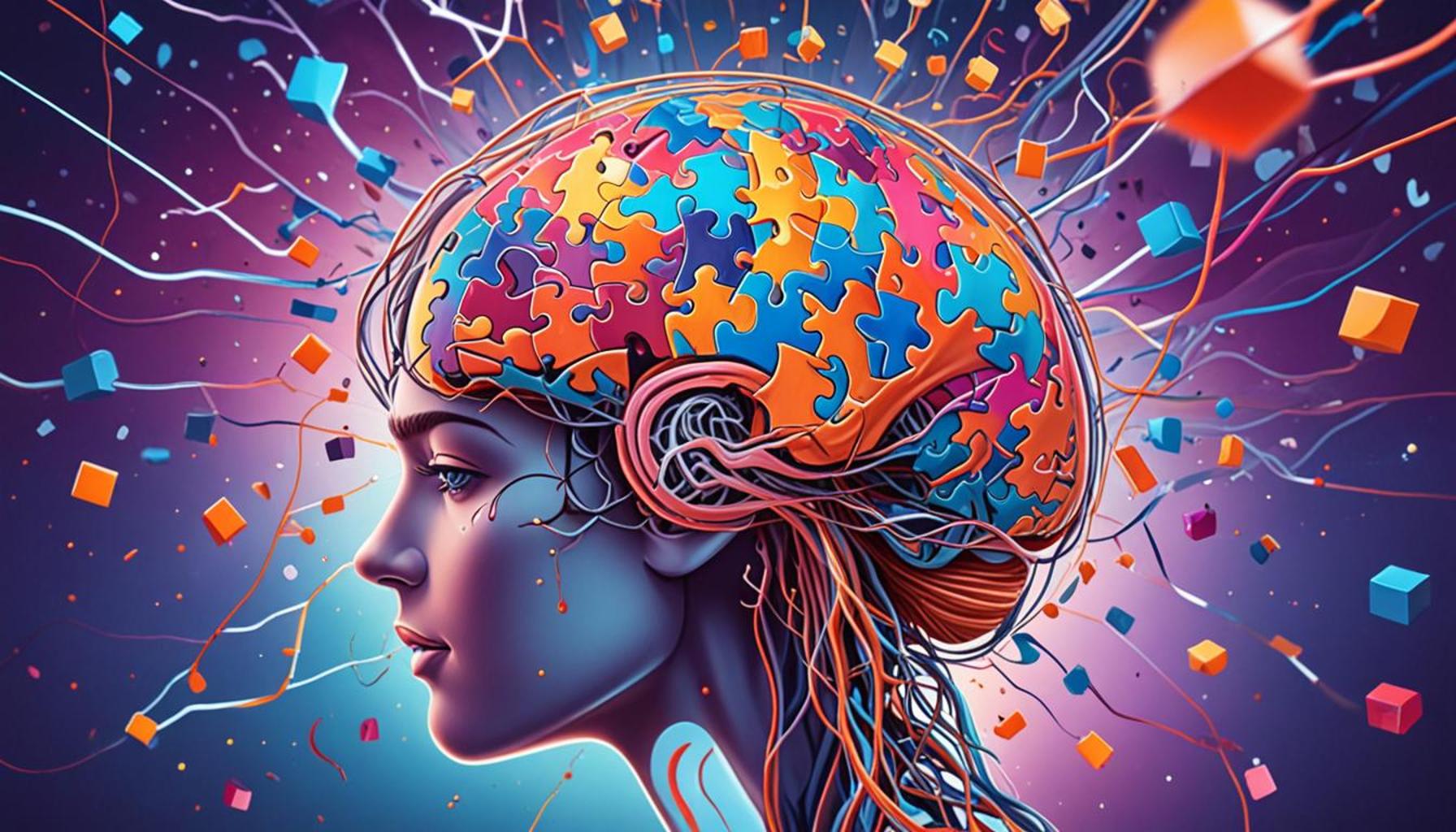
The Intersection of Logic and Brain Science
Logical enigmas have enthralled individuals across various cultures and generations, from ancient philosophers to modern puzzle enthusiasts. These intricate challenges serve not just as intellectual entertainment but also as tools to explore the rich landscape of human cognition. Understanding how our brain tackles these puzzles can illuminate the broader aspects of our decision-making processes, especially in today’s fast-paced world where choices abound and the stakes are high.
Delving into neuroscience offers a clearer picture of the cognitive mechanics at play when we engage with logical puzzles. Here, we explore several pivotal insights:
- Activation Patterns: Solving logical enigmas engages certain brain regions, particularly the prefrontal cortex. This area is known for its pivotal role in decision-making, problem-solving, and complex thought processes. Research indicates that when individuals grapple with puzzles, neuroimaging studies show increased blood flow to this region, suggesting heightened cognitive activity.
- Cognitive Biases: Logical enigmas often expose inherent biases, such as confirmation bias or anchoring bias, that can distort our judgment. For instance, a puzzle that prompts individuals to reconsider their initial assumptions can demonstrate how biases might cloud our ability to make sound decisions. Recognizing these tendencies through engaging with these puzzles is a crucial step in fostering better analytical skills.
- Problem-Solving Skills: Regular engagement with logical enigmas can significantly enhance cognitive flexibility, a characteristic highly valued in both personal and professional settings. This improved flexibility allows individuals to adapt their thinking according to new information, a vital skill in high-pressure situations, such as business decisions or life-changing choices.
The dynamic relationship between logical enigmas and the neuroscience behind them opens a rich avenue for exploration. These puzzles provide a unique framework for understanding how we think and make choices. For example, consider the classic logic problem of the “Two Doors,” where one door leads to safety and the other to danger, and you can only ask one question to the guardian of each door. Engaging with such dilemmas encourages deeper analytical thinking, potentially making us better decision-makers in real life.
Furthermore, the lessons we derive from logical puzzles may help us refine our cognitive processes. In environments ranging from the workplace to everyday personal interactions, honing our problem-solving capabilities could be indispensable. What hidden strategies lie within these enigmas that can guide us to make more informed decisions in our daily lives? As we continue to decode the connection between logical puzzles and neuroscience, we unveil not only the workings of our minds but also the pathways to sharpen our reasoning skills for the future.
DISCOVER MORE: Click here to uncover the evolution of brain teasers

The Cognitive Mechanics of Solving Puzzles
Logical enigmas not only entertain but challenge our cognitive abilities, providing a window into how our brains function under different scenarios. When we encounter these puzzles, we are not just flexing our mental muscles; we are engaging a complex interplay of neural pathways that govern decision-making processes. By unpacking how our brains respond to such challenges, we can gain insights into our thinking patterns and improve our analytical skills, leading to more informed decisions.
When faced with a logical puzzle, various brain networks spring into action. Neuroimaging studies have revealed that the prefrontal cortex, responsible for higher-order functions like reasoning and judgment, is particularly active during these tasks. This region helps us in forging connections between disparate pieces of information and assessing potential outcomes of our decisions. For instance, when solving an enigma, we must weigh our options carefully, analyze the implications of our choices, and search for inconsistencies in our thinking, all of which require significant output from the prefrontal cortex.
Moreover, logical enigmas unveil our cognitive biases, illuminating the quirks of our thought processes that can lead us astray. Biases such as the confirmation bias, where we favor information that confirms our preexisting beliefs, can impede our ability to see the broader picture. Engaging with logical puzzles forces us to challenge our assumptions, offering a reflective exercise that sheds light on how these biases might cloud our judgment in real-world situations. This understanding can be particularly beneficial in settings like workplace decision-making, where recognizing our biases can lead to more balanced assessments.
In addition to exposing biases, tackling logical enigmas sharpens our problem-solving skills, enhancing cognitive flexibility. Cognitive flexibility is the ability to adapt one’s thinking in response to new information, a critical skill in dynamic environments—be it in business, academia, or personal relationships. Regular interaction with logical puzzles trains our brains to approach problems from various angles, fostering creativity and innovation in our solutions.
Furthermore, the principles we derive from these enigmas can translate into practical applications. Consider the famed “Monty Hall Problem,” where participants must decide whether to stick with their original choice of door or switch after new information is presented. Engaging with such dilemmas not only encourages deeper analytical thinking but also mirrors the typical decision-making processes we encounter in everyday life, emphasizing the importance of reevaluating our options based on emerging evidence.
As we navigate a world filled with choices, the relationship between logical enigmas and neuroscience underscores the profound impact of cognitive exercises on our decision-making abilities. The lessons gleaned from these puzzles are not mere academic exercises; they have real-world implications that can equip us with better strategies for reasoning and choice, ultimately optimizing our ability to make sound decisions.
| Advantage | Description |
|---|---|
| Enhanced Cognitive Flexibility | Logical enigmas stimulate neural pathways, allowing individuals to adapt their thinking and approach to problem-solving. |
| Improved Decision-Making Skills | Engagement with neuroscience-based puzzles enhances critical thinking, leading to more informed choices in daily life. |
As we delve deeper into the intricate connection between logical enigmas and neuroscience, it becomes evident that solving these puzzles offers profound benefits for cognitive development. Engaging with complex problems challenges our mental faculties, promoting the cultivation of cognitive flexibility. This flexibility is crucial not only in tournament-style puzzle competitions but also in real-world scenarios, where quick adaptability is essential. Moreover, studies in the field of cognitive neuroscience show that exposure to intricate decision-making models can refine our approach to everyday decisions. It appears that the brain, when trained with logical challenges, grows more adept at analyzing outcomes and mitigating risks, crucial elements in both personal and professional contexts. Such insights may spark curiosity among readers about their own decision-making processes. Are we truly utilizing the full potential of our brains when faced with choices? Exploring this relationship further can illuminate our understanding of how engagement with logical enigmas may unlock untapped capabilities within us.
DISCOVER MORE: Click here to delve into the evolution of puzzle challenges
The Neuroscientific Insights into Decision Making
The exploration of logical enigmas goes beyond mere entertainment; it opens up a realm of understanding concerning the neurobiological mechanisms that underpin decision-making. Research has discovered that engaging with such puzzles can trigger dopamine release within our brains, which is associated with the anticipation of reward. This dopamine response not only makes solving enigmas pleasurable but also reinforces behaviors that promote critical thinking and effective decision-making.
Studies utilizing functional Magnetic Resonance Imaging (fMRI) have showcased that when individuals solve logical puzzles, areas of the brain associated with reward processing light up, particularly the ventral striatum. This indicates a direct link between engaging with cognitive challenges and the motivation to solve complex problems. Consequently, these encounters stimulate a cycle where the more we challenge our brains, the more adept we become at making informed choices.
In addition to the reward system, logical enigmas engage different parts of the brain responsible for spatial reasoning and working memory. Insightful puzzles often require us to visualize scenarios, manage multiple variables, and hold information temporarily while we navigate through potential solutions. This mental juggling enhances our cognitive capacity, effectively providing a workout for our brains that translates into improved abilities in both personal and professional settings.
Furthermore, the connection between logical enigmas and enhanced decision-making extends into emotional regulation. Research suggests that engaging in problem-solving activities, such as those presented in logical puzzles, can help alleviate stress and anxiety. By encouraging focus on cognitive tasks, we divert attention from emotional triggers, allowing individuals to approach real-world decisions with a more balanced mindset. This emotional clarity can lead to more rational choices, particularly in high-stakes environments where impulsive reactions may otherwise cloud judgment.
Beyond individual benefits, the strategic use of logical enigmas in educational and corporate settings has gained momentum. Many organizations are incorporating brain teasers and puzzles into team-building exercises, recognizing the power of collaborative problem-solving to enhance group dynamics. These activities not only foster stronger interpersonal relationships but also promote collective cognitive agility, which is crucial in today’s fast-paced, multifaceted workplaces.
The implications of logical enigmas on decision-making are not limited to personal or corporate realms. For instance, in the realm of financial decision-making, professionals frequently face complex scenarios requiring objective analysis and innovative thinking. Engaging with logical puzzles can prime financial analysts to consider various outcomes and embrace uncertainty, ultimately leading to more successful investment strategies.
Furthermore, recent advances in educational psychology suggest that integrating logical enigmas into curricula can boost students’ critical thinking skills. As children and adolescents grapple with challenging puzzles, they not only build foundational problem-solving abilities but also prepare themselves for future decisions that demand higher cognitive function. The incorporation of such exercises can result in a generation better equipped to navigate the complexities of modern life and work.
As we delve deeper into the fascinating interplay between logical enigmas and the brain’s decision-making machinery, it becomes evident that these challenges are far from trivial. They provide profound insights into our internal cognitive frameworks and offer practical tools to enhance our reasoning skills across multiple domains in life.
DISCOVER MORE: Click here to learn about the benefits of memory games
Conclusion: The Transformative Power of Logical Enigmas
In conclusion, the exploration of logical enigmas reveals a compelling intersection of neuroscience and decision-making. As we engage with these intricate puzzles, we not only stimulate our brain’s reward centers but also enhance critical cognitive skills vital for navigating life’s complexities. Logical enigmas challenge our working memory and spatial reasoning, creating an invigorating mental workout that translates into improved problem-solving abilities across various domains, from personal decisions to professional challenges.
The insights gleaned from neuroscience suggest that cultivating a habit of regularly engaging with puzzles can lead to significant emotional and cognitive benefits. These enjoyable exercises not only sharpen our analytical capabilities but also foster a sense of community in collaborative environments, proving beneficial in both educational and corporate settings. The ability to think critically and make informed decisions can significantly enhance outcomes, whether navigating the fast-paced world of finance or preparing students for future challenges.
Moreover, as we increasingly understand the profound impact that logical enigmas have on our brains, it becomes clear that their role extends beyond simple amusement. They empower us to approach decision-making with enhanced clarity and resilience, promoting a generation that is better equipped for the demands of modern life. In essence, integrating these cognitive challenges into our daily routines invites us to think critically, remain adaptable, and face uncertainty with confidence—skills that are indispensable in today’s ever-evolving landscape.