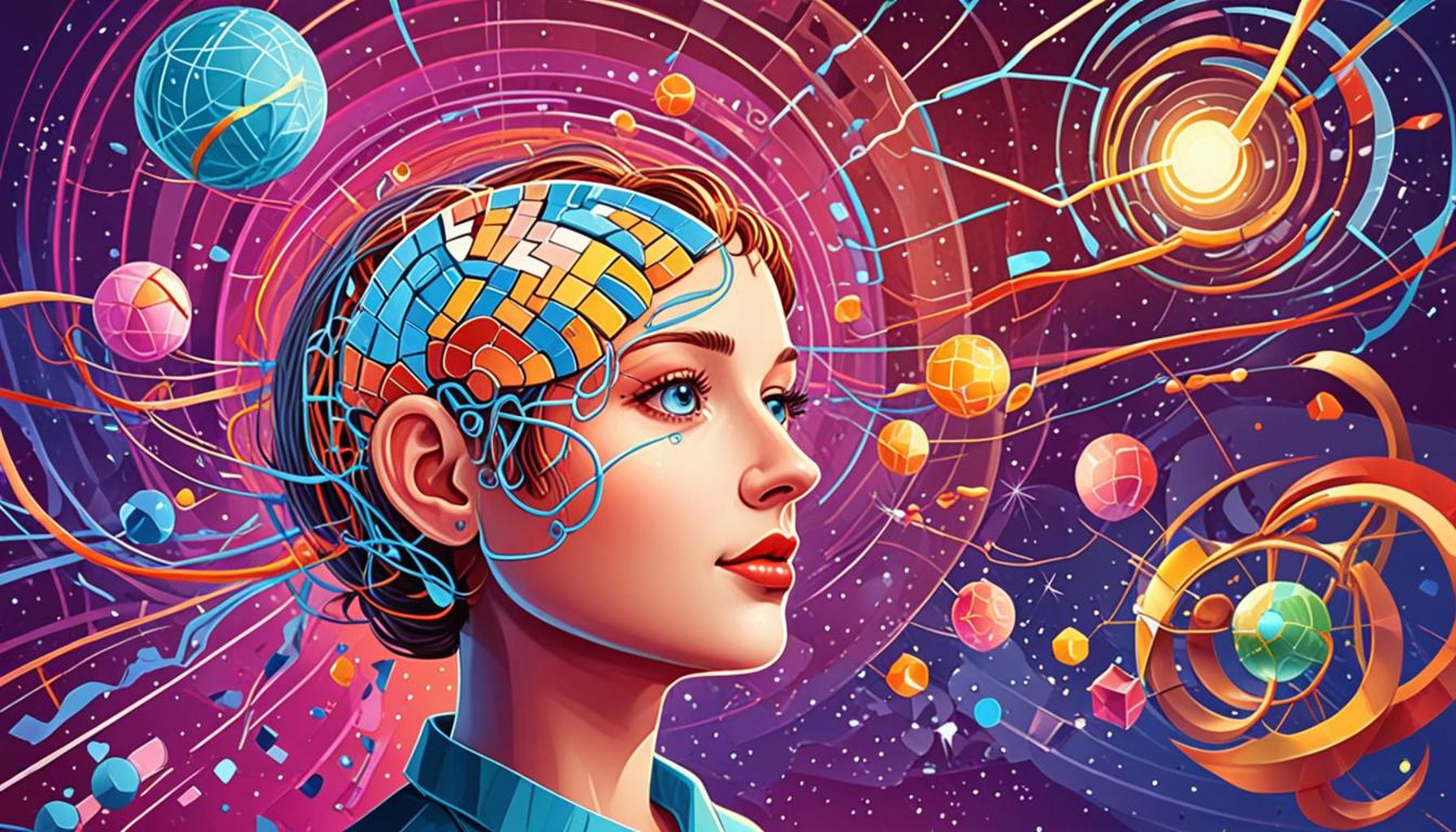
The Intersection of Logical Puzzles and Artificial Intelligence: Challenges and Opportunities

Understanding the Intersection of AI and Logical Puzzles
The world of logical puzzles has captivated individuals for centuries, drawing in philosophers, mathematicians, and everyday enthusiasts eager to engage their reasoning skills. Today, this intrigue is magnified with the integration of Artificial Intelligence (AI), which not only enhances the complexity of common puzzles but also presents new dimensions in how we approach problem-solving and reasoning tasks. The marriage between AI and logical puzzles sparks fascinating developments that redefine our understanding of both fields.
AI systems harness a variety of techniques, including machine learning and natural language processing, to approach puzzles that require careful reasoning. For example, in the classic game of chess, algorithms such as Deep Blue and AlphaZero showcase AI’s capability by competing against the world’s best players. These systems analyze millions of potential moves and outcomes in seconds, highlighting not only the strategic depth of chess but also the remarkable efficiency of AI in logic-heavy scenarios.
Another compelling example lies within Sudoku, a popular numeric puzzle that demands logical reasoning for solution generation. Advanced algorithms exhibit incredible prowess, with some designed to solve puzzles within fractions of a second, while others create unique and challenging puzzles for human players. This example showcases how AI can enhance both play and style within traditional puzzle frameworks.
Beyond gaming, AI is making strides in logic games that require intricate scenario analyses. Programs designed to engage in paradoxes or conditional reasoning tasks mimic human thought processes in ways that were once considered uniquely human. These advancements signify an exciting potential, but they also present challenges related to intuitive reasoning and dealing with incomplete or ambiguous data.
- Challenge: One major hurdle for AI is to emulate human-like intuitive reasoning. While algorithms can follow defined rules and patterns, they often struggle with abstract thought processes that humans naturally use, particularly in ambiguous situations.
- Opportunity: There is a significant opportunity for designing AI tools that can revolutionize educational resources. By integrating interactive puzzles within educational platforms, AI can provide personalized learning experiences, catering to diverse cognitive styles and enhancing problem-solving skills in students.
- Challenge: Handling incomplete data remains a critical issue. Unlike humans, who can make educated guesses based on context, AI systems often falter when faced with uncertainty, highlighting the inherent limitations in employing logic under fluctuating conditions.
As we venture deeper into this topic, we uncover how AI is not merely a tool but an influencing factor that reshapes logical reasoning. From enhancing cognitive skills through engaging puzzles to refining AI methodologies, the implications of this synergy span multiple domains, including education, gaming, and even cognitive therapy. Engaging with these topics not only enriches our understanding but also encourages further exploration of how AI can positively impact critical thinking and problem-solving in everyday life.
DISCOVER MORE: Click here to unlock the cognitive benefits
Exploring the Complex Challenges of Logical Reasoning in AI
The integration of Artificial Intelligence (AI) into the realm of logical puzzles underscores a series of intricate challenges that researchers and developers need to navigate. The ability of AI to mimic human reasoning processes, particularly when confronted with complex problems, remains a formidable task. One of the primary challenges is the distinction between deductive reasoning and inductive reasoning, two foundational components of logical thought that individuals utilize seamlessly. While AI excels in deductive reasoning—deriving conclusions from established premises—it often stumbles with inductive reasoning, which involves forming generalizations based on specific observations.
For instance, a typical logical puzzle may present a scenario that requires the solver to recognize patterns or make educated guesses, elements that human solvers often tackle with intuition and context. In contrast, AI systems are reliant on vast datasets and defined algorithms. This reliance can lead to limitations—particularly when faced with ambiguous data or scenarios that lack clear-cut solutions. When AI encounters uncertainty, its decisions can lack the nuanced judgment that a human might bring to the table.
Another significant challenge is the quest for commonsense reasoning. Humans possess an innate ability to apply everyday knowledge to solve puzzles that may at first appear illogical. This capability draws from years of experience and a nuanced understanding of the world, attributes that remain elusive for AI systems. As algorithmic models become more sophisticated, researchers are exploring methods to incorporate commonsense reasoning, yet progress continues to lag behind expectations.
The Benefits and Opportunities of AI in Logical Puzzles
Despite these challenges, the intersection of AI and logical puzzles presents remarkable opportunities for innovation. There is immense potential for the development of educational tools that leverage AI to enhance learning experiences. For example, interactive platforms could harness AI algorithms to present personalized puzzle challenges that adapt to individual skill levels. This adaptability not only facilitates greater engagement among learners but also amplifies their problem-solving skills through tailored experiences.
Beyond education, AI can significantly enhance game design and entertainment sectors. By analyzing player strategies and behaviors in real-time, AI can generate puzzles that dynamically adjust in complexity, ensuring an exhilarating challenge for users. This can lead to a significantly enhanced user experience, where the thrill of overcoming a well-designed logical puzzle feels rewarding thanks to the personalized touch of AI.
- Opportunity: AI can revolutionize puzzle creation, enabling developers to design unique challenges that continually evolve based on player performance and preferences.
- Challenge: The requirement for vast amounts of data to train AI systems means they can inadvertently amplify existing biases present in the datasets.
- Opportunity: AI can foster collaboration among users, creating online communities that share solutions, techniques, and puzzle-building strategies.
The strides made in this arena provoke further considerations about the role of AI in our daily logical reasoning tasks. Hence, as we delve deeper into the intricate relationship between AI and logical puzzles, we must critically assess both the challenges and opportunities that arise, ensuring we harness AI’s potential responsibly and effectively.
The Intersection of Logical Puzzles and Artificial Intelligence: Challenges and Opportunities
Within the realm of artificial intelligence, logical puzzles present unique challenges and opportunities for advancement. As AI strives to replicate human cognition, it often encounters problems that require not only technical accuracy but also creative reasoning. By integrating logical puzzles into AI algorithms, researchers can develop systems that enhance critical thinking skills, a feature often taken for granted in human intelligence.
Moreover, AI’s ability to process vast amounts of data allows for an exciting exploration of logical reasoning paradigms. For example, game-theoretical approaches can inspire AI solutions for complex decision-making scenarios. Here, logical puzzles serve as a microcosm for these larger systems, demonstrating how decisions can hinge on strategic reasoning and foresight.
However, the intersection of AI and logical puzzles is not without its obstacles. One major challenge lies in transferring raw computational results into intuitive problem-solving strategies. AI may generate solutions to logical puzzles, yet future developments must ensure that these solutions are practical and understandable for human users. This requires an ongoing dialogue between AI researchers and cognitive scientists to refine and adapt algorithms that learn from human problem-solving techniques.
Another opportunity arises in the educational field, where logical puzzles can be harnessed to help teach artificial intelligence fundamentals in an engaging manner. By utilizing puzzles to demonstrate complex concepts, educators can capture the interest of students, enhancing their understanding of AI while sharpening their analytical skills. This integration of logical puzzles into educational frameworks can lead to a future generation more adept in navigating both technology and logical reasoning.
| Category | Details |
|---|---|
| Cognitive Challenge | Puzzles enhance AI’s ability to think critically and solve problems. |
| Decision-Making Opportunities | Exploring game theory through logical puzzles can improve decision-making strategies. |
As we delve deeper into the fascinating convergence of AI and logical puzzles, it becomes clear that both fields stand to gain invaluable insights. The challenges encountered are not mere roadblocks but rather opportunities for innovation that can propel research and applications to new heights.
DIVE DEEPER: Click here to uncover the evolution of puzzle challenges
Harnessing AI for Enhanced Problem-Solving: Future Prospects
The intersection of artificial intelligence and logical puzzles also opens up intriguing avenues for research and development that could redefine how we approach problem-solving in various arenas. Recognizing these possibilities allows us to envision a future where AI is not just a tool but a collaborator in cognitive challenges. The integration of machine learning with logical puzzles can lead to the creation of systems that learn from their environment and adaptively refine their problem-solving strategies. Such an evolution could significantly enhance AI’s ability to tackle not only logical puzzles but also real-world scenarios requiring complex decision-making.
One particularly promising direction lies in the domain of natural language processing (NLP). As AI systems become more proficient in understanding and generating human language, they can better engage with logical puzzles presented in narrative forms. For instance, AI could be trained to not just evaluate mathematical puzzles but also to parse verbal riddles or situational puzzles embedded in text. These puzzles often require an understanding of subtleties, cultural references, and even linguistic puns—elements that challenge current AI capabilities. NLP advancements could change the landscape, ensuring that AI can engage with a wider variety of puzzles and reasoning tasks.
- Opportunity: Enhanced NLP competencies could allow AI systems to assist students and professionals in dissecting complex literary or philosophical puzzles by providing insightful analyses and perspectives.
- Challenge: The undisputed reliance on data means that AI could misinterpret or fail to process nuances in language, leading to incorrect outputs that could confuse users rather than assist them.
Moreover, inter-disciplinary approaches—combining cognitive science with AI research—hold substantial promise for refining logical reasoning capabilities within AI. By studying how humans solve puzzles, researchers can glean insights into the cognitive processes that drive decision-making. These insights can inform the design of better algorithms that mimic human-like flexibility and adaptability in problem-solving scenarios. For example, insights from studies on cognitive biases and heuristics can guide the development of AI systems that better accommodate the unpredictability of human logic.
Furthermore, the rise of gamification in education, often infused with AI, offers a compelling framework for enhancing logical thinking among diverse demographics. Game-based learning platforms utilizing AI can create rich, immersive environments where learners of all ages engage with logical puzzles designed to challenge their critical thinking abilities. Such platforms can leverage real-time analytics to identify gaps in understanding and dynamically adjust the difficulty of puzzles, promoting a continuous learning cycle.
- Opportunity: AI-driven gamified educational tools can foster collaborative environments where users collaborate to solve complex puzzles, thereby enhancing critical thought processes and teamwork.
- Challenge: The design and implementation of such tools must prioritize inclusivity and accessibility to ensure that diverse learning styles and needs are effectively catered to.
As we examine the future intersection of logical puzzles and artificial intelligence, it becomes evident that each advancement comes with a duality of challenges and opportunities. Thorough investigation and ethical consideration are imperative to ensure that these AI enhancements respect human complexities while promoting an environment conducive to innovative problem-solving.
DISCOVER MORE: Click here to dive deeper into the evolution of puzzles
Conclusion: Navigating the Future of AI and Logical Puzzles
The dynamic interplay between logical puzzles and artificial intelligence brings forth a landscape rich with challenges and opportunities. As AI systems evolve to solve complex problems, their potential not only to enhance traditional logical reasoning but also to cultivate new methods of inquiry becomes apparent. From improving natural language processing to harnessing insights from cognitive science, the commitment to understanding the nuances of human thought will play a pivotal role in shaping AI’s capabilities.
Importantly, the future development of AI tools hinges on our ability to address pressing challenges, such as the risk of misinterpretation in language processing and the need for inclusivity in gamified educational platforms. Balancing these challenges with the opportunities they present—like fostering collaborative environments and enhancing cognitive learning experiences—will determine the effectiveness of AI in tackling logical puzzles in meaningful ways.
Ultimately, the intersection of AI and logical puzzles serves as a reflection of humanity’s quest for knowledge and innovation. By continuing to explore this synergy, we stand to not only advance AI technologies but also redefine our own approaches to problem-solving. As we forge ahead, it is essential to maintain an ethical compass that respects the complexities of human reasoning and creativity, opening doors to a future where AI stands as a true partner in our intellectual endeavors.