Puzzle Challenges and Culture: How Different Societies Approach Mental Games
Understanding the Cultural Significance of Puzzles
Puzzles, in their myriad forms, serve as reflections of the cultural values and traditions embedded in societies worldwide. They do not merely represent forms of entertainment; they reveal important insights into the collective mindset, history, and social dynamics of the communities they originate from. As we explore the diverse landscape of puzzle-solving across different cultures, we uncover fascinating layers of meaning that highlight how these mental challenges influence and shape social interactions.
Japan: The Land of Order and Logic
In Japan, the popularity of Sudoku and intricately designed logic puzzles speaks volumes about the society’s emphasis on numeracy, structure, and cognitive skill. Invented in the late 18th century by a Japanese architect, Sudoku was popularized in the early 2000s and has since taken the world by storm. The puzzles challenge solvers to fill a 9×9 grid with numbers from 1 to 9, ensuring that each number appears only once in each row, column, and grid. This pursuit of logical reasoning is not solely for entertainment; it reflects a cultural appreciation for discipline, patience, and a well-ordered life. Educational institutions often incorporate such puzzles into curricula to sharpen students’ analytical skills.
United States: The Social Aspect of Puzzles
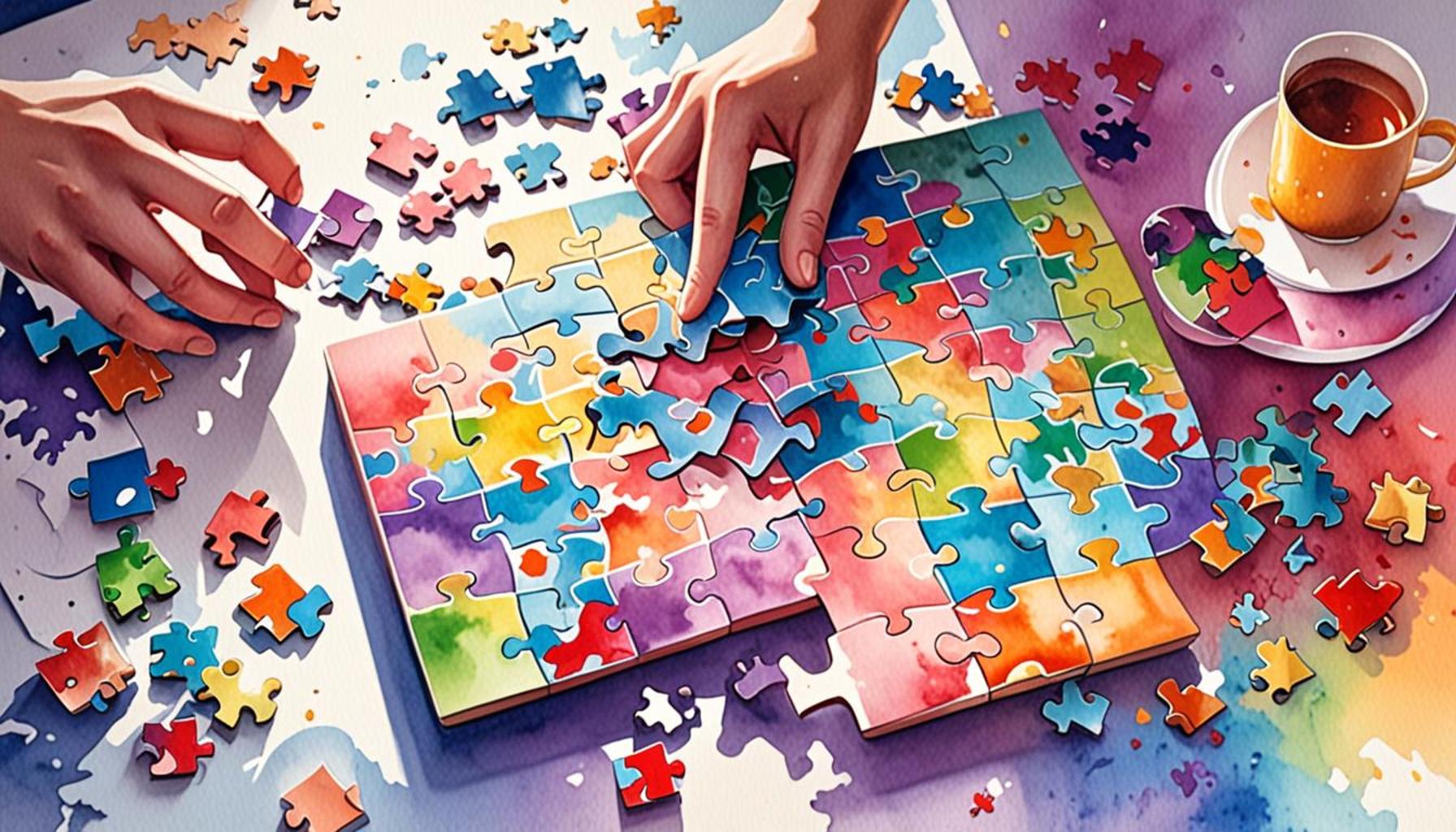
Moving to the United States, we find that crossword puzzles and jigsaw puzzles reign supreme, resonating with a culture that values entertainment, relaxation, and socialization. Popularized in the early 20th century, crossword puzzles have become a staple in newspapers and online platforms, offering everything from general knowledge to specialized themes, such as pop culture and current events. They encourage both individual thought and group discussion—a trait exemplified by puzzle-happy communities gathering to tackle the Sunday crossword together. Jigsaw puzzles, similarly, foster connections among families and friends as they huddle around a table, piecing together colorful images while sharing stories and laughter. This social aspect of puzzle-solving showcases American values of community and collaboration.
China: Strategy and Visual-Spatial Reasoning
In China, traditional games like Tangrams and various strategy-based board games illustrate the society’s inclination toward visual-spatial reasoning and innovative thinking. Tangrams, believed to have originated centuries ago, consist of seven flat pieces that can be arranged to form various shapes. This activity not only sharpens problem-solving skills but also encourages creativity, allowing solvers to derive multiple solutions from a single set of pieces. Additionally, games like Xiangqi (Chinese chess) emphasize strategic foresight and planning, skills that are highly valued in Chinese culture, both academically and professionally.
Cultural Practices and Technological Influences
The origins of these puzzles and games are often steeped in history, but modern technology has also had a profound impact on how they are engaged with. Online platforms and mobile applications have given rise to a new generation of puzzle enthusiasts, introducing features like multiplayer modes and timed challenges that cater to younger audiences. However, this shift does not always overshadow traditional practices; rather, it often complements them, allowing for a blend of old and new, and creating an evolving landscape of mental challenges.
By contrasting these various approaches to puzzle-solving, we gain invaluable insights into how puzzle challenges contribute to cognitive development and social bonds across cultures. Join us in this exploration of the intriguing relationship between mental games and cultural identity as we delve deeper into the practices, philosophies, and histories that surround them.
DIVE DEEPER: Click here to enhance your mind game
The Role of Puzzles in Cognitive Development Across Cultures
Puzzles have long been recognized as powerful tools for cognitive development, yet the variation in their types and popularity across cultures speaks volumes about the values and learning styles unique to each society. From enhancing logical reasoning skills to fostering social bonds, puzzles play different roles in different cultural contexts. By examining these differences, we can better appreciate how mental games are intertwined with the fabric of societal identity.
India: The Rich Tapestry of Traditional Games
In India, the rich tradition of puzzles is often intertwined with cultural and historical narratives. Games like Chowka Bhara, a strategy board game, not only provide entertainment but also serve as a medium for teaching younger generations about strategy, patience, and resource management. The structure of such games varies widely, demonstrating a blend of mathematical and artistic elements that reflect the diversity of Indian culture. Additionally, crossword puzzles in regional languages have gained traction, showcasing how language and local knowledge can enhance puzzle-solving experiences and offer a sense of community. This diverse approach to puzzles emphasizes not only entertainment but also educational and social purposes.
Middle East: The Art of Storytelling through Challenges
In many Middle Eastern countries, puzzles and games often serve as vessels for storytelling and cultural preservation. Traditional games such as backgammon, with origins dating back thousands of years, encourage strategy and foresight. They often feature prominently in social gatherings, linking friends and family through a shared history embedded in the gameplay. Furthermore, modern puzzle books and online challenges frequently incorporate elements of local folklore and history, allowing players to engage with their cultural heritage while honing their cognitive skills. This unique interplay between mental games and storytelling illustrates the important role of culture in shaping how these challenges are perceived and enjoyed.
A Growing Global Puzzle Community: Bridging Cultures
The rise of social media and online platforms has also led to a democratization of puzzles, allowing individuals from various backgrounds to connect through shared interests. Platforms like Websudoku and community-driven sites have created global spaces where puzzle enthusiasts can engage, collaborate, and celebrate cultural differences while enjoying mental games. This connectivity fosters a sense of global citizenship and offers a rich tapestry of perspectives on puzzle-solving methods and strategies.
- Cross-cultural exchanges: Many international competitions, such as the World Puzzle Championship, bring together diverse puzzle solvers, encouraging cultural exchanges that redefine traditional approaches.
- Cultural fusion: Innovative puzzles emerge from blending game styles and strategies of different cultures, enriching the global puzzle landscape.
- Digital evolution: The convenience of mobile applications allows for a broader reach, facilitating access to puzzles that incorporate cultural narratives from around the world.
As we delve deeper into the world of puzzle challenges and their cultural significance, we begin to see how they are not merely isolated activities but rather interconnected threads within the rich fabric of society. By investigating these dimensions, we uncover layers of meaning that enhance our understanding of both puzzles and the cultures from which they stem.
| Category | Description |
|---|---|
| Cultural Significance | In many societies, mental games like chess and Go are viewed not just as pastimes but as elements that foster strategic thinking and cognitive development. |
| Community Building | Participating in puzzling challenges often creates a sense of community, enhancing social bonds and cultural identity through shared experiences. |
Exploring how different societies engage with mental games reveals interesting insights into their values and social structures. For instance, in East Asian cultures, games such as Go are deeply intertwined with philosophical concepts, encouraging not just competition but also contemplation and reflection. In Western societies, chess tournaments are often celebrated as arenas for demonstrating intellectual prowess. Moreover, the design and structure of puzzles reflect cultural values. For example, crossword puzzles in the English-speaking world frequently include references to literary works, showcasing cultural literacy, while Sudoku has become a universal phenomenon, proving that number-based puzzles cross cultural boundaries effectively. As mental games evolve, they adapt to new technologies and platforms, leading to digital forms of traditional puzzles gaining popularity. This adaptation not only preserves cultural elements but also introduces them to global audiences, blending practices and enriching the global tapestry of mental gaming culture. Exploring these approaches can illuminate how societies prioritize intellect, strategy, and community engagement through puzzles, inviting further investigation into the role these games play in various cultural contexts.
DIVE DEEPER: Click here to unlock proven strategies
The Intersection of Puzzles and Education in Various Cultures
Puzzle challenges serve as educational tools across cultures, reflecting local values, teaching modalities, and priorities in cognitive development. For instance, in Japan, the traditional sudoku and logic puzzles are not just popular pastimes but integral components of school curricula. Classroom environments encourage students to engage with these puzzles as a means of developing problem-solving skills and enhancing their mathematical abilities. The graceful intersection of play and education in Japan illustrates a collective understanding that mental challenges foster critical thinking from an early age.
Scandinavian Countries: Emphasizing Collaboration and Community
In Scandinavian nations like Sweden and Denmark, puzzle-solving often emphasizes collaboration over competition. Games like Jenga and Logic Grid Puzzles are commonly used in social settings, with friends and family gathering not just to compete, but to share laughter and build connections. Here, puzzles serve as a means of cultivating community ties. Additionally, these countries host puzzle-oriented events that promote teamwork and collective problem-solving abilities. This approach highlights a cultural inclination toward inclusivity and collective achievement, differing markedly from more individualistic styles prevalent in other cultures.
The United States: A Melting Pot of Puzzle Innovations
The diverse landscape of the United States has birthed an array of innovative puzzles that reflect the country’s multicultural identity. Escape rooms, which have surged in popularity across American cities, exemplify a blend of storytelling and logic. They offer participants immersive experiences that often require teamwork and communication to solve intricate puzzles. Furthermore, crosswords and brain teasers dominate newspapers and mobile apps, captivating millions who seek mental stimulation and relaxation simultaneously. The use of pop culture references in these puzzles often creates a shared experience that transcends generational and cultural divides, making them a fascinating case study on how puzzles can resonate across a spectrum of American society.
African Cultures: Learning Through Play
In various African cultures, mental games serve as vital educational tools used by elders to impart wisdom and life skills. Games like mancala not only engage players in strategy but also teach principles of resource allocation and negotiation. They are often played in communal settings, fostering social ties and transmitting knowledge across generations. This cultural practice underscores the importance of community learning and the role puzzles play in the cultural transmission of values and history, acting as more than entertainment, but as vehicles for education and responsivity to cultural heritage.
- Interactive Learning: The incorporation of puzzles into learning environments emphasizes creativity and engagement, showcasing educational shifts globally towards dynamic teaching strategies.
- Cultural Significance: The uniqueness of various puzzles reveals the cultural narratives they represent, offering rich insights into the societies from which they originate.
- Modern Applications: Emerging puzzle technologies, such as augmented reality games, are starting to bridge traditional gameplay with contemporary methods, introducing new learning modalities and experiences.
The exploration of puzzles across different cultures unveils a deeper understanding of their roles in education and community bonding. By parsing through regional variations and innovative adaptations, we unravel the rich interconnections between mental games and cultural values, indicating an evolving landscape in how societies engage with cognitive challenges.
DIVE DEEPER: Click here to enhance your memory skills
Conclusion
As we navigate through the diverse landscapes of puzzle challenges, it becomes evident that these mental games are not merely recreational pastimes; they are cultural reflections that shape and reinforce societal values across the globe. From the emphasis on education in Japanese classrooms to the collaborative spirit evident in Scandinavian gatherings, puzzles serve as gateways to understanding deeper social connections and collective behaviors. In the United States, the fusion of innovative puzzle formats represents a rich tapestry of multicultural influences, highlighting how puzzles can transcend generational gaps and unite people through shared experiences.
In African communities, puzzles like mancala stand as vital educational systems, illustrating the role of traditional games in preserving history and knowledge. These cultural contexts remind us that mental challenges are not universally approached but tailored to fit local sensibilities and educational frameworks. The increasing adoption of modern technologies in puzzle creation, such as augmented reality, signals an exciting evolution in how puzzles are perceived and employed in learning and social structures.
As we reflect on the myriad ways societies engage with puzzles, one must consider the implications for future generations. The sustained interest in puzzles offers a unique opportunity for cultural exchange, inviting individuals to explore and appreciate diverse methods of thought and problem-solving. Ultimately, this ongoing dialogue surrounding puzzle challenges serves as a reminder that our creative capacities are enhanced not only by personal ingenuity but also by our cultural interactions, which fuel the relevance and enjoyment of these age-old mental games.