The Influence of Puzzles on the Improvement of Memory and Attention in Adults

Unveiling Cognitive Benefits Through Puzzles
Puzzles have long been a cherished activity, engaging people of all ages with their stimulating challenges. However, their impact runs deeper than mere amusement. Growing research in cognitive science indicates that engaging with various types of puzzles may significantly enhance memory and attention among adults.
Types of Puzzles and Their Intricacies
Puzzles come in various forms, each offering unique cognitive challenges. Popular varieties include:
- Crosswords: These word puzzles not only enrich vocabulary but also require players to connect clues with answers, engaging both recall and reasoning skills.
- Sudoku: Known for its grid-based number placement, Sudoku sharpens logical reasoning and pattern recognition, essential skills in mathematics and critical thinking.
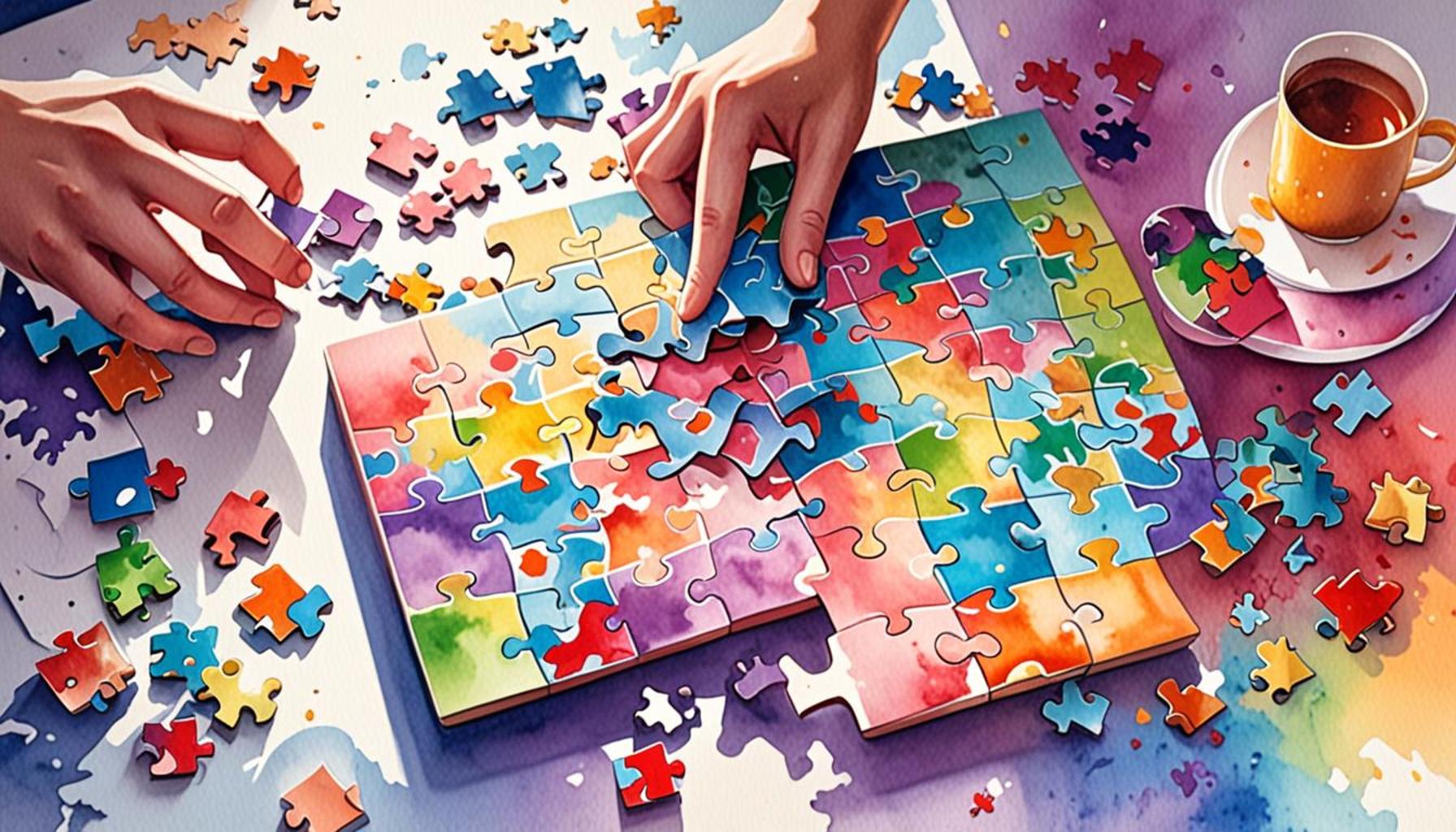
- Jigsaw Puzzles: These visually stimulating challenges demand spatial reasoning and patience as one pieces together fragments to create a coherent image.
- Logic Puzzles: These puzzles often present scenarios requiring deductive reasoning, allowing individuals to develop problem-solving strategies and improve decision-making skills.
Embracing Cognitive Gains
The benefits of puzzle-solving extend beyond simple entertainment, offering significant cognitive gains. Engaging in these activities can enhance cognitive function, leading to improved problem-solving abilities and greater focus. A study published in the journal “Neuropsychology” found that adults who regularly engage in puzzle-solving exhibited notable enhancements in memory retention and attentiveness over time. Participants were able to respond more quickly and accurately in cognitive tasks after a sustained period of puzzle engagement.
Additionally, engaging with puzzles fosters a sense of accomplishment, which can motivate continued participation in intellectually stimulating activities. For example, while solving a Sudoku puzzle, a player may feel an adrenaline rush with each number placement, reinforcing cognitive perseverance and providing a rewarding brain workout.
Puzzles as Everyday Cognitive Tools
The intriguing relationship between puzzles and cognitive enhancement invites practical application in everyday life. Adults seeking to boost their mental acuity can integrate puzzles into their daily routines, whether through dedicated puzzle books or mobile applications. This approach not only transforms leisure time into a productive endeavor but also offers a fun way to combat challenges like cognitive decline or memory lapses.

In conclusion, as we begin to appreciate the cognitive wonders that puzzles unveil, the journey encourages not just enjoyment, but a pathway to a sharper mind and clearer focus. These brain challenges, when woven into our daily lives, can invigorate our mental faculties, proving that the age-old practice of puzzle-solving is not merely a nostalgic pastime, but a robust strategy for enhancing cognitive health.
DIVE DEEPER: Click here for mind-bending challenges
Cognitive Mechanics: How Puzzles Work to Enhance Memory and Attention
Understanding how puzzles positively affect cognitive abilities requires delving into the mechanisms of the mind. Engaging with puzzles presents the brain with a set of challenges that invoke various mental processes, activating regions linked to memory and attention. This activation can lead to enhanced neural connections, which are instrumental in improving overall brain function.
When individuals tackle a crossword puzzle, for example, they must search their memory banks for both vocabulary and contextual knowledge. This search process not only strengthens long-term memory by reinforcing synaptic connections but also boosts working memory, which is crucial for maintaining information temporarily. Research has shown that engaging with word puzzles can increase the brain’s processing speed and enhance memory retrieval capabilities, creating a dual benefit for adult players.
In addition to enhancing memory, puzzles engage the mind in ways that significantly improve attention span. Activities like Sudoku and jigsaw puzzles require sustained concentration and multi-step reasoning. As players focus on arranging numbers or sorting pieces, their ability to maintain attention improves over time. This sustained focus translates into better performance in daily tasks, from work-related projects to personal activities.
The Science Behind Puzzle Solving
Numerous studies have been conducted to assess the relationship between puzzles and cognitive enhancement. A notable study published in the journal “Cognitive Psychology” found that adults who dedicated time to solving puzzles showed marked improvements in memory recall and attentiveness compared to those who did not engage in such activities. Participants reported feeling mentally sharper and less distracted in their daily endeavors.
Moreover, engaging with puzzles can lead to neuroplasticity—the brain’s remarkable ability to reorganize itself by forming new neural connections. This is particularly significant as we age. A study from the University of California, Berkeley, suggested that adults who regularly partake in mentally stimulating activities like puzzles may delay cognitive decline and improve their mental agility, further underscoring the link between puzzle-solving and brain health.
Puzzles as a Lifelong Learning Experience
Including puzzles in one’s lifestyle is also a key strategy for lifelong learning. The adaptability of puzzles enables adults to tackle challenges at different levels of complexity, catering to varying personal capacities. Whether it’s a simple word search or a complex logic grid, there’s always an opportunity to learn and evolve. Importantly, the experience of solving puzzles fosters a continuous cycle of learning by building both memory and attention skills.
As we explore the depths of cognitive improvement through puzzles, it becomes clear that these engaging activities serve as valuable tools for adults striving to maintain mental sharpness and enhance their cognitive faculties. By investing time in puzzle-solving, individuals not only find enjoyment but also make significant strides in preserving and sharpening their mental capabilities.
As adults engage in various activities throughout their daily lives, the impact of puzzles on cognitive functions such as memory and attention becomes increasingly critical. Research indicates that solving puzzles can serve as a mental workout, enhancing problem-solving skills and boosting creativity. Adults who regularly participate in these brain-stimulating activities not only have improved focus and retention of information but also demonstrate heightened overall mental agility.
The process of solving puzzles requires a level of engagement that can significantly improve short-term memory. For instance, crossword puzzles necessitate that individuals recall words and definitions, which enhances their verbal memory capabilities. Similarly, jigsaw puzzles challenge spatial reasoning and pattern recognition, both of which are vital for attention improvement. Engaging in these activities can unlock latent cognitive abilities, revealing that the saying “you’re never too old to learn” rings particularly true when it comes to puzzles.
Moreover, the repetitive nature of puzzles provides terrific practice for sustained attention. Adults can develop their focus over longer periods of time, effectively honing their ability to concentrate on tasks without distraction. This is especially beneficial in today’s digital environment, where multitasking and screen time can fragment attention. Jigsaw puzzles or Sudoku require maintaining concentration to complete challenges, thus paving the way for better focus in other areas of life, from personal pursuits to professional endeavors.
Furthermore, social engagement through puzzles should not be overlooked. Collaborative puzzle-solving can foster relationships and create teamwork dynamics, which not only aid in memory retention through shared experiences but also enhance cognitive flexibility as individuals adapt to different strategies and viewpoints. The social aspect introduces a layer of emotional enhancement that strengthens memory retention through the added dimension of shared human interaction. The multifaceted benefits of puzzles make them a powerful tool for adults aiming to boost their cognitive capabilities. To delve deeper into this fascinating subject, the following table outlines the key advantages of engaging with puzzles.
| Category | Benefits |
|---|---|
| Memory Enhancement | Improves verbal recall and retention through word puzzles and definitions. |
| Attention Focus | Enhances sustained concentration by engaging with complex problem-solving. |
Dive Deeper: Click here to unlock the secrets of puzzle design
Exploring Diverse Puzzle Types and Their Unique Cognitive Benefits
Not all puzzles are created equal; each type offers distinct cognitive benefits that contribute to the overall improvement of memory and attention in adults. Understanding these differences can guide individuals in selecting the puzzles that best suit their cognitive enhancement goals.
For instance, crossword puzzles primarily stimulate verbal memory and increase vocabulary. Participating in this type of puzzle not only rejuvenates existing vocabulary but encourages players to learn new words. Research in the journal “Neuroscience & Biobehavioral Reviews” highlights that regular engagement in crossword puzzles correlates with improved verbal memory skills, a critical cognitive function useful in both professional and social settings.
Another popular form, the Sudoku puzzle, emphasizes logical reasoning and pattern recognition. Players must maintain focus and attention as they navigate through possible number placements. Studies have shown that engaging with Sudoku can enhance not only overall problem-solving skills but also foster improved numerical memory, as players often need to keep track of multiple numbers simultaneously. This multi-faceted concentration has lasting effects on other everyday tasks requiring numerical analysis.
Jigsaw Puzzles: Visual Recognition and Spatial Awareness
The appeal of jigsaw puzzles extends beyond mere leisure; they play a significant role in improving visual-spatial skills and fostering attention to detail. Players must sort and manage numerous pieces while visualizing how they fit together, thereby enhancing their ability to recognize patterns and make spatial judgments. A recent study published in the “Journal of Experimental Psychology” indicated that individuals who regularly complete jigsaw puzzles demonstrate heightened improvements in visual memory and attention span, which are essential in various day-to-day activities such as navigation or even driving.
Digital Puzzles: Modern Challenges for Cognitive Improvement
With the rise of technology, digital puzzles have emerged as engaging platforms for cognitive enhancement. Mobile applications offering variations of puzzle types, such as word searches or brain teasers, allow adults to practice their skills on-the-go. This accessibility makes it easier to incorporate cognitive challenges into daily routines, providing a continuous avenue for mental stimulation.
Furthermore, digital puzzles often come with built-in progress tracking, enabling players to measure improvements in memory and attentional capabilities over time. For example, a digital crossword app may adapt the difficulty level based on the user’s performance, ensuring that the challenges escalate as cognitive skills develop, further fostering the cycle of improvement.
The Social Aspect: Collaboration Through Puzzles
Puzzles also offer a social component that enhances cognitive benefits. Collaborative puzzle-solving, be it with family members or friends, boosts social interactions, which is crucial for mental health. This aspect of teamwork can further enrich the cognitive experience, as engaging in discussions around puzzle strategies requires communication skills and teamwork. Such social puzzles create a platform for shared learning experiences, strengthened relationships, and improved cognitive function through group discussions.
As various puzzle types cater to diverse cognitive needs, adults who incorporate these activities into their daily routines stand to gain significant advantages in both memory and attention. The array of options available today ensures that there is a puzzle out there suitable for every individual, ultimately facilitating a more engaged and nimble mind.
DIVE DEEPER: Click here to enhance your skills
Conclusion: Embracing Puzzles for Cognitive Growth
In conclusion, the exploration of various types of puzzles—from crosswords and Sudoku to jigsaw puzzles and modern digital variations—reveals their profound influence on enhancing memory and attention in adults. Engaging regularly with these cognitive challenges not only sharpens critical thinking skills but also promotes mental agility essential for navigating the complexities of daily life.
Each puzzle type offers unique benefits tailored to the specific cognitive domains they target, effectively creating an engaging and effective approach to memory improvement. For instance, while crosswords enhance verbal memory, jigsaw puzzles foster spatial awareness and visual recognition. Digital puzzles add a modern twist, enabling convenient access to mental challenges that can seamlessly fit into our busy lifestyles.
Moreover, the social aspect of puzzle-solving cannot be underestimated. Collaborative puzzle activities strengthen interpersonal bonds while simultaneously enhancing cognitive function, providing a multi-faceted approach to personal development. This communal aspect allows for shared learning experiences and a support network that contributes to overall mental well-being.
As research continues to illuminate the cognitive benefits associated with puzzles, it becomes increasingly clear that integrating these activities into daily routines is a beneficial strategy for adults seeking to bolster their memory and attention. By choosing puzzles that resonate with personal interests and goals, individuals can embark on a fulfilling journey of continual cognitive enhancement. Ultimately, this playful engagement serves as both a source of enjoyment and a powerful tool for mental acuity, inviting everyone to discover the delightful world of puzzles.