
Cognitive Games as Tools for Aging: How Puzzles Can Help Maintain Cognitive Function in Seniors
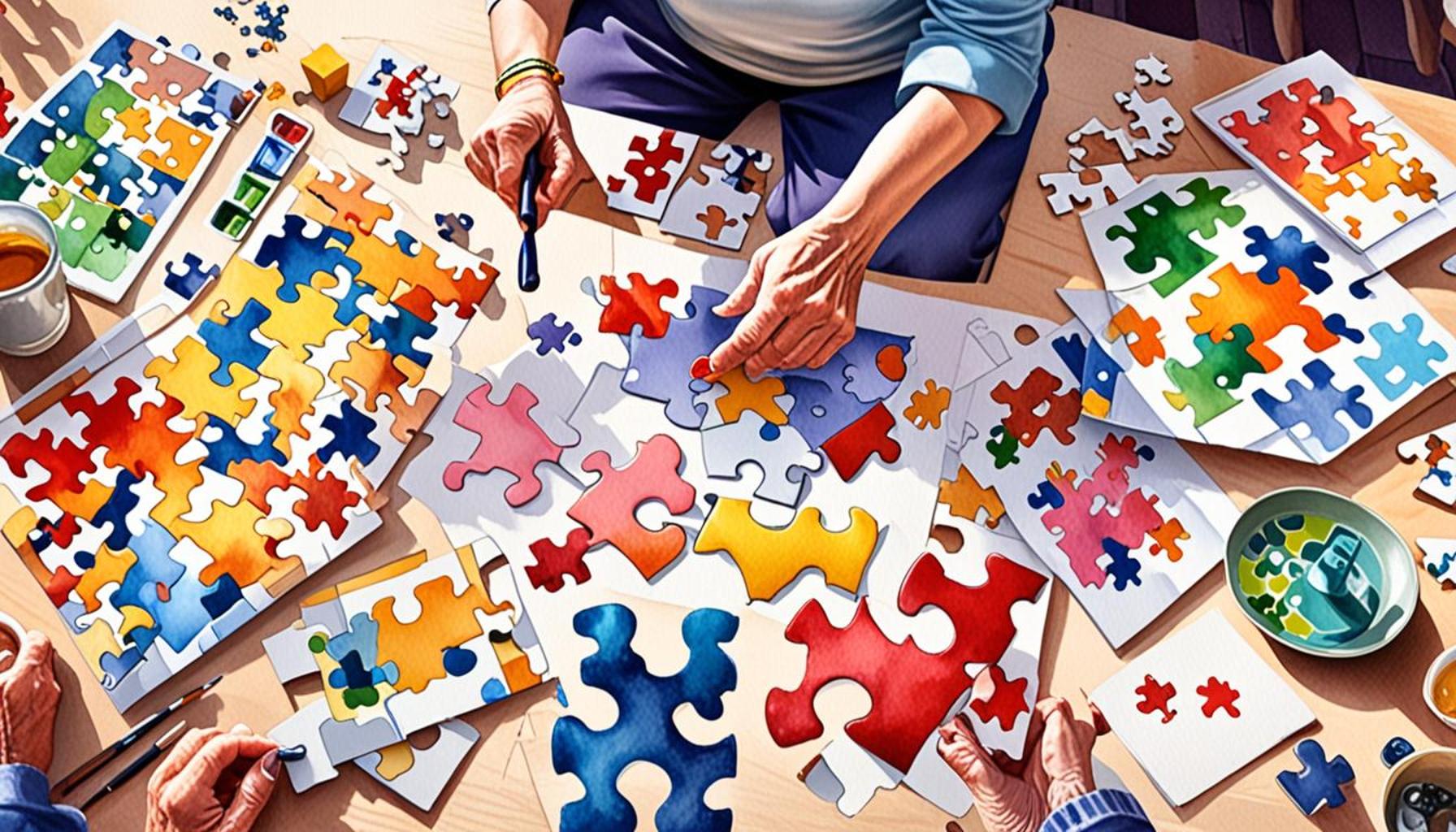
Connecting the Dots: Cognitive Health in Aging
As our bodies age, preserving cognitive health becomes a key component of overall well-being. The brain, much like any muscle in the body, requires regular exercise and stimulation to remain robust. Various studies highlight that engaging in cognitive games can be crucial for sustaining brain function, especially for seniors. These enjoyable exercises offer a delightful way to challenge one’s mind, making them a potent tool against cognitive decline.
The Benefits of Puzzles
- Enhances Memory: Puzzles facilitate memory recall and retention. Tasks that require repeated engagement, such as solving jigsaw puzzles, can significantly improve short-term memory, enhancing daily activities like remembering names or important dates.
- Improves Problem-Solving Skills: Complex puzzles demand thoughtful strategies, encouraging individuals to think critically. For instance, solving a Rubik’s Cube develops abstract thinking and spatial awareness, attributes vital for decision-making in everyday situations.
- Boosts Mood: The sense of accomplishment derived from completing a puzzle can trigger the release of dopamine, a neurotransmitter associated with pleasure and satisfaction. Such feelings are particularly beneficial for seniors, potentially decreasing feelings of isolation and depression.
Incorporating puzzles along with alternatives such as crosswords, Sudoku, and brain teasers into daily routines can yield remarkable improvements in cognitive longevity. Studies indicate that these activities do not only stimulate neuronal connections but also encourage social interactions when performed in groups. For example, many senior centers in cities across the United States host weekly puzzle nights that not only challenge the brain but also reinforce community ties.
What Research Shows
Recent research has unveiled a strong correlation between regular engagement with cognitive games and lower rates of cognitive decline among seniors. A notable study published in the Journal of Aging and Health demonstrated that older adults who participated in activities such as word puzzles exhibited slower declines in cognitive function compared to those who did not engage in similar activities. This illustrates the potential of mental exercises to be just as critical as physical activities for seniors in the United States and beyond.
This growing body of evidence suggests that challenging the brain may serve as a crucial strategy in promoting healthier aging. Furthermore, the shift towards digital platforms offers new opportunities for engaging cognitive games through apps and online forums, making them more accessible. With our aging population, exploring these mental workouts can be an essential investment in the future well-being of millions, ensuring that age truly becomes just a number.
DISCOVER MORE: Click here to enhance your mind game performance
Unlocking the Mind: The Power of Puzzles in Cognitive Health
Cognitive games, particularly puzzles, have emerged as invaluable tools in the quest to maintain cognitive function as we age. Engaging the brain through activities that challenge its capabilities is essential—not just for retaining memory but for ensuring a robust cognitive landscape in later years. Studies show that when seniors regularly participate in cognitive games, they often experience a myriad of benefits that extend beyond simple entertainment.
Cognitive Engagement through Diverse Puzzle Formats
Puzzles come in various forms, each targeting different cognitive skills. Here are some types of puzzles that have shown significant benefits for senior cognitive health:
- Crossword Puzzles: These classic brain teasers not only enhance vocabulary but also improve memory retention by requiring individuals to recall information. Regular engagement helps maintain the neural pathways involved in language processing.
- Sudoku: Number-based puzzles like Sudoku train logical reasoning and problem-solving skills. The grids encourage players to use deductive reasoning, a skill crucial for everyday decision-making.
- Jigsaw Puzzles: Beyond mere entertainment, assembling jigsaw puzzles involves visual-spatial skills and strengthens memory as players fight to retain the shapes and colors of pieces that fit together.
By incorporating these activities into their daily routines, seniors can actively engage their brains, fostering an environment conducive to cognitive longevity. In addition, many communities across the United States are witnessing a rise in structured puzzle clubs and gatherings that facilitate not only mental exercise but also crucial social interactions. The blending of cognitive games with camaraderie provides emotional support, further enriching the experience.
Staying Sharp: Real-Life Applications and Benefits
The impact of these cognitive games extends beyond mere enjoyment; they serve as a proactive approach to combating age-related cognitive decline. Research has consistently demonstrated that older adults who actively engage in brain-stimulating activities show slower rates of cognitive impairment. A study from the University of Southern California emphasized that those who frequently participated in puzzles and cognitive tasks reported less cognitive decline over five years compared to their non-puzzle-solving peers.
This evidence reiterates the idea that mental exercise can significantly contribute to a fulfilling life in later years. As more seniors recognize the importance of engaging their minds, the availability of digital cognitive games through apps becomes a appealing avenue for many. These platforms often provide tailored experiences that adapt to individual skill levels, making brain exercise convenient and accessible for the aging population.
Ultimately, the benefits of puzzles go beyond mere moments of leisure; they represent a sustaining force in the fight against cognitive decline. By fostering mental resilience, these games enable seniors to maintain independence and quality of life, proving that engaging the brain is not just beneficial—it’s essential.
| Category | Description |
|---|---|
| Mental Stimulation | Engaging in puzzles and games improves brain activity. |
| Social Interaction | Puzzles often encourage group participation, combating isolation. |
| Memory Enhancement | As seniors work on challenges, they bolster their memory retention. |
| Problem Solving Skills | Puzzles develop critical thinking and adaptability in daily life. |
Research has consistently shown that engaging in cognitive activities helps to not only maintain but also enhance cognitive functions in seniors. As individuals age, they may experience declines in memory and problem-solving capabilities; however, activities such as crossword puzzles, Sudoku, and memory games can serve as valuable tools to mitigate these challenges. These activities stimulate various brain regions, enhancing neuroplasticity—the brain’s ability to form new connections and adapt.Furthermore, participating in cognitive games can provide significant social benefits. Many seniors find themselves isolated, leading to loneliness and mental health issues. Social puzzles that require collaboration can improve interpersonal bonds and encourage communication, significantly uplifting the participants’ mood and cognitive states. The compound effect of both social interaction and mental engagement creates a holistic approach to maintaining cognitive health and well-being in the golden years. Exploring such avenues can prove invaluable for both seniors and their families, fostering a supportive environment that encourages ongoing cognitive growth.
DISCOVER MORE: Click here to learn about cognitive games in rehabilitation
The Neuroscience Behind Puzzles: Why They Work
Understanding the science behind why puzzles benefit cognitive health reveals just how crucial these activities are for seniors. Engaging in cognitive games stimulates neuroplasticity, the brain’s ability to reorganize itself by forming new neural connections. Research conducted by the American Academy of Neurology indicates that regularly solving puzzles can significantly enhance brain function by fostering synaptic plasticity, allowing for improved communication between neurons.
Furthermore, puzzles help improve executive functions, which encompass skills such as planning, focusing attention, and multitasking. Neuroscientists have highlighted that mental challenges encountered in puzzles encourage a flow of oxygenated blood to the brain, fortifying brain health and keeping cognitive faculties engaged. This is particularly important as age-related cognitive decline often accompanies diminished blood flow to critical areas of the brain responsible for memory and reasoning.
Social Engagement and Cognitive Stimulation
Participating in puzzle-solving is not only a solitary endeavor; it often includes social interaction, another essential ingredient in maintaining cognitive function among seniors. Group activities surrounding puzzles promote a sense of community and emotional well-being, factors that are increasingly important as loneliness becomes prevalent in older populations. A comprehensive study from the National Institute on Aging found that socially active seniors have a 29% to 76% lower risk of cognitive decline.
Communities across the United States are implementing puzzle activities in senior centers and retirement homes, where residents come together not only to tackle brainteasers but also to share stories and experiences. This dual engagement—both cognitive and social—enhances not just mental acuity but also overall happiness, proving that laughter and conversation can boost brain health.
Tailoring Puzzles to Individual Needs
Importantly, cognitive games can be adapted to meet the varying demands of different individuals. For seniors with early signs of cognitive decline or those recovering from strokes, simpler puzzles may help reinforce fundamental cognitive skills. Conversely, more mentally challenging puzzles can cater to those looking to maximize their brain’s potential. Moreover, many organizations are now developing custom-tailored puzzle programs that match seniors with puzzles suitable for their unique cognitive profiles. This personalized approach ensures engagement while minimizing frustration.
The emergence of technology in puzzle-solving also equips seniors with versatile options. Apps designed specifically for older adults not only provide an accessible way to engage with cognitive exercises but also often include features that allow caregivers or family members to monitor progress, creating an opportunity for encouragement and support.
In this digital age, the introduction of online puzzle competitions and collaborative puzzle-solving platforms adds another layer of engagement, where seniors can connect with peers from different regions, fostering community and mutual support. This interconnectedness reinforces the notion that cognitive engagement is as much about the interaction as it is about the exercise itself.
Ultimately, the capacity of puzzles to stimulate the mind and evoke social connections underscores their importance as tools for aging gracefully. In a world where cognitive decline is often seen as inevitable, puzzles shine as a beacon of hope, offering practical solutions to preserve cognitive function and enhance quality of life for seniors.
DISCOVER MORE: Click here to enhance your cognitive abilities
Conclusion: Puzzles as Vital Tools for Healthy Aging
As we delve into the realm of cognitive enhancement, it becomes increasingly clear that cognitive games, particularly puzzles, offer profound benefits for seniors. Engaging in these activities not only nurtures the brain through neuroplasticity and improved synaptic connections but also fosters essential executive functions that are critical for daily decision-making and problem-solving. The scientific evidence supporting the positive impact of puzzles on brain health reinforces their role as an effective means to combat age-related cognitive decline.
Moreover, the social aspects of puzzle-solving cannot be overstated. The evolution of community-centered puzzle activities highlights the dual benefit of mental stimulation and emotional connectivity, which is vital for well-being in older adults. In a society where loneliness often affects seniors, group puzzle activities provide an essential platform for interaction, significantly reducing the risk of cognitive decline as evidenced by the National Institute on Aging.
Importantly, the adaptability of puzzles allows them to cater to individual needs, ensuring that everyone from those experiencing early cognitive changes to those looking to push their brain limits can find suitable challenges. With the integration of technology, puzzle-solving is more accessible and engaging than ever before, making it a versatile tool for maintaining cognitive fitness.
In summary, integrating puzzles into the daily routines of seniors not only promotes mental agility and *social engagement* but enhances their overall quality of life. In the face of inevitable aging, cognitive games stand out as an effective strategy to help seniors thrive, ensuring that they embrace their golden years with sharp minds and joyful hearts. For those keen to support their aging loved ones, the time to harness the power of puzzles is now. As you explore this enriching path, you might just discover that every puzzle piece comes with a story worth sharing.